Arthritis affects millions of people in the UK, and one of the most common challenges it creates is difficulty getting in and out of the bath. The high sides of a traditional bath require a combination of balance, flexibility, and strength that can become genuinely painful (or even dangerous) for someone with stiff or swollen joints. If your parent has reached the point where bathing has become a struggle, you are not alone, and there are practical, lasting solutions available.
The good news is that modern accessible bathing has come a long way. From walk-in baths with waist-height doors to level-access wet rooms that eliminate steps and thresholds entirely, today’s options are designed to make daily bathing safe, comfortable, and dignified. As specialists in mobility bathrooms with over 25 years of experience, we’ve helped many families in exactly this situation.
This guide will walk you through the main options, what to consider for someone with arthritis specifically, and how to make a decision that genuinely improves your parent’s day-to-day life.
Why a standard bath becomes a problem for people with arthritis
A conventional bath typically sits around 50 to 60 centimetres high on the outside, which means getting in requires lifting one leg at a time over a substantial barrier. For someone with arthritis in the hips, knees, or ankles, this motion can be painful and puts them at real risk of losing their footing. Getting out involves standing up from a low, wet, slippery surface, which is where many bathroom accidents happen.
According to the NHS, falls are the most common cause of injury-related death in people over 75, and the bathroom is one of the highest-risk rooms in the home. For someone managing arthritis, the combination of reduced grip strength, limited range of movement, and wet surfaces makes a standard bath a real concern. Addressing this isn’t about overreacting, it’s about being sensible.
What is a walk-in bath, and is it right for someone with arthritis?
A walk-in bath is designed specifically for people who find it difficult to step over the sides of a traditional bath. Instead of climbing in from above, the bather opens a door set into the side of the bath, steps through at a low threshold (often just a few centimetres from the floor), closes the door behind them, and then fills the bath.
For someone with arthritis, the benefits are significant. The low entry point removes the need for any high leg lift. Many walk-in baths include a built-in seat so the bather can lower themselves into a comfortable position without needing to crouch. Handrails and anti-slip surfaces are standard features, and some models include spa jets or air baths, which can be genuinely soothing for aching joints.
It’s worth understanding how the door system works before making a decision. You step in and close the door before filling the bath, and you must wait for it to drain before opening the door to get out. For some people this feels perfectly straightforward; for others, particularly those who find sitting still uncomfortable for extended periods, it’s worth discussing whether this routine will suit your parent’s needs. Our team is always happy to talk this through honestly.
Could a walk-in shower be a more practical option?
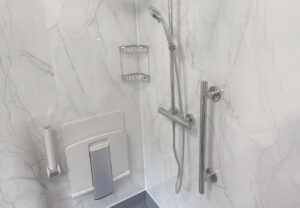
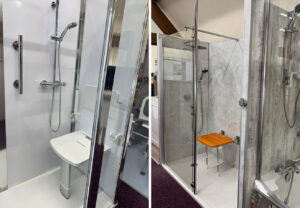
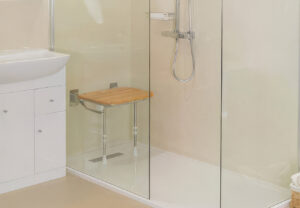
For many people with arthritis, a well-designed walk-in shower offers a simpler and equally safe solution. Modern accessible showers can be fitted with a low or flush-to-floor tray, meaning there is no step to negotiate at all. Combined with a fold-down shower seat, thermostatic controls (which prevent sudden changes in water temperature), and grab rails positioned at the right height, a walk-in shower can be used comfortably and safely even on days when mobility is more restricted.
Showers also tend to be quicker and less tiring than a bath, which can matter on days when your parent is in more pain or has less energy. If they have been avoiding bathing because of how difficult it has become, a shower that feels safe and easy to use can make a real difference to their confidence and wellbeing.
What is a wet room, and when does it make the most sense?
A wet room takes the level-access idea a step further. The entire bathroom floor is waterproofed and gently graded towards a drain, meaning there is no tray, no threshold, and no barrier of any kind. Wet rooms are particularly well suited to people who use a wheelchair or walking frame, or who need assistance from a carer when bathing.
For someone with arthritis who is currently independent but wants a bathroom that will continue to serve them well as their needs change, a wet room is worth considering. It is the most flexible of the accessible bathing options and can be adapted over time with additional grab rails or seating as required. Our showroom near Tamworth, the largest mobility bathroom showroom in the UK, has full wet room displays so you can get a genuine sense of the space before making any decisions.
Which features matter most when arthritis is the main concern?
Whatever type of accessible bathroom you choose, certain features make a particular difference for someone managing arthritis. When speaking with our team, it’s worth asking about the following:
- Grab rails positioned at the right height for your parent’s build, providing support when sitting, standing, or stepping.
- Anti-slip flooring on shower trays, wet room floors, and bath bases, which reduces the risk of falls on wet surfaces.
- Thermostatic shower controls, which hold the water at a set temperature and prevent scalding (useful as arthritis can affect how well someone feels temperature changes).
- Lever-style taps and easy-grip handles, which require far less hand strength to operate than traditional twist taps.
- A built-in seat or fold-down seat at a comfortable height, allowing your parent to shower or bathe without needing to stand for extended periods.
How does the installation process actually work?
One of the most common concerns we hear from families is about disruption. The idea of having the bathroom out of use for an extended period, particularly for an older or less mobile parent, can feel daunting. In practice, most of our installations are completed within a few days, and we manage the process to minimise disruption as much as possible.
We start with either a home visit or a consultation at our showroom, where we take measurements, understand your parent’s specific needs, and talk through the options. From there, we produce a design and agree a timeline. All of our installers are experienced in working in occupied homes, and we are accredited by Checkatrade, The Guild of Master Craftsmen, Trustatrader, and Which? Trusted Trader, so you can have confidence in the quality of the work.
Frequently asked questions bathing with arthritis
Can a walk-in bath really be used safely with arthritis?
Yes, walk-in baths are designed specifically for people with reduced mobility, including arthritis. The low-access door removes the need to lift your leg over a high bath side, and built-in seats, grab rails, and anti-slip bases all help to make bathing much safer. As with any bathroom adaptation, the key is choosing a product that suits your parent’s specific needs and having it fitted correctly by an experienced team.
My parent lives alone. Which accessible bathing option is safest for someone without a carer present?
A level-access walk-in shower is often the most practical choice for someone bathing independently. There is no filling and draining sequence to manage, no door to wait beside, and the design can be tailored with the right combination of grab rails, seating, and thermostatic controls to make solo bathing as safe as possible. That said, the right choice depends on your parent’s specific mobility and preferences, and we are always happy to advise based on their individual situation.
Will an accessible bathroom look clinical or institutional?
Not at all. Modern accessible bathrooms are designed to look and feel like any other well-finished bathroom. Walk-in showers, wet rooms, and walk-in baths are available in a wide range of styles, finishes, and colours. Grab rails in particular have come a long way and can now be matched to taps and fittings for a cohesive, attractive result. Many of our customers are pleasantly surprised by how good the finished bathroom looks.
Is it possible to keep the existing bath and just make it safer?
How long does it take to have a walk-in shower or walk-in bath installed?
Most installations are completed within two to four days, depending on the scope of the work. A simple walk-in shower conversion in an existing space is typically at the faster end, while a full wet room installation involving waterproofing and new flooring may take a little longer. We always agree a clear timeline before work begins and aim to keep disruption to an absolute minimum.
Do I need to visit a showroom, or can someone come to us?
Both options are available. We have the largest mobility bathroom showroom in the UK at our base near Tamworth, where you can see full-size displays of walk-in baths, walk-in showers, and wet rooms before making any decision. If visiting isn’t convenient, we also offer home visits so we can assess the existing bathroom, take measurements, and discuss options in a way that works around your parent’s routine.