If you’re thinking about changing your bathroom to make bathing easier and safer, a walk-in bath is likely to be high on your list. They’re one of the most popular choices for people who want to keep their independence at home, and it’s easy to see why. But like any big decision, it’s worth looking at the full picture before you commit.
Walk-in baths have some clear and genuine advantages, particularly for people with reduced mobility, joint pain, or a fear of slipping in a conventional bath. At the same time, there are a few practical points worth knowing about before you decide whether one is right for you.
We’ve been designing and installing mobility bathrooms for over 25 years, so we’ve had thousands of conversations with people asking exactly this question. Here’s our honest take on the benefits and the limitations, so you can make the best choice for your home and your circumstances.
What makes a walk-in bath different from a standard bath?
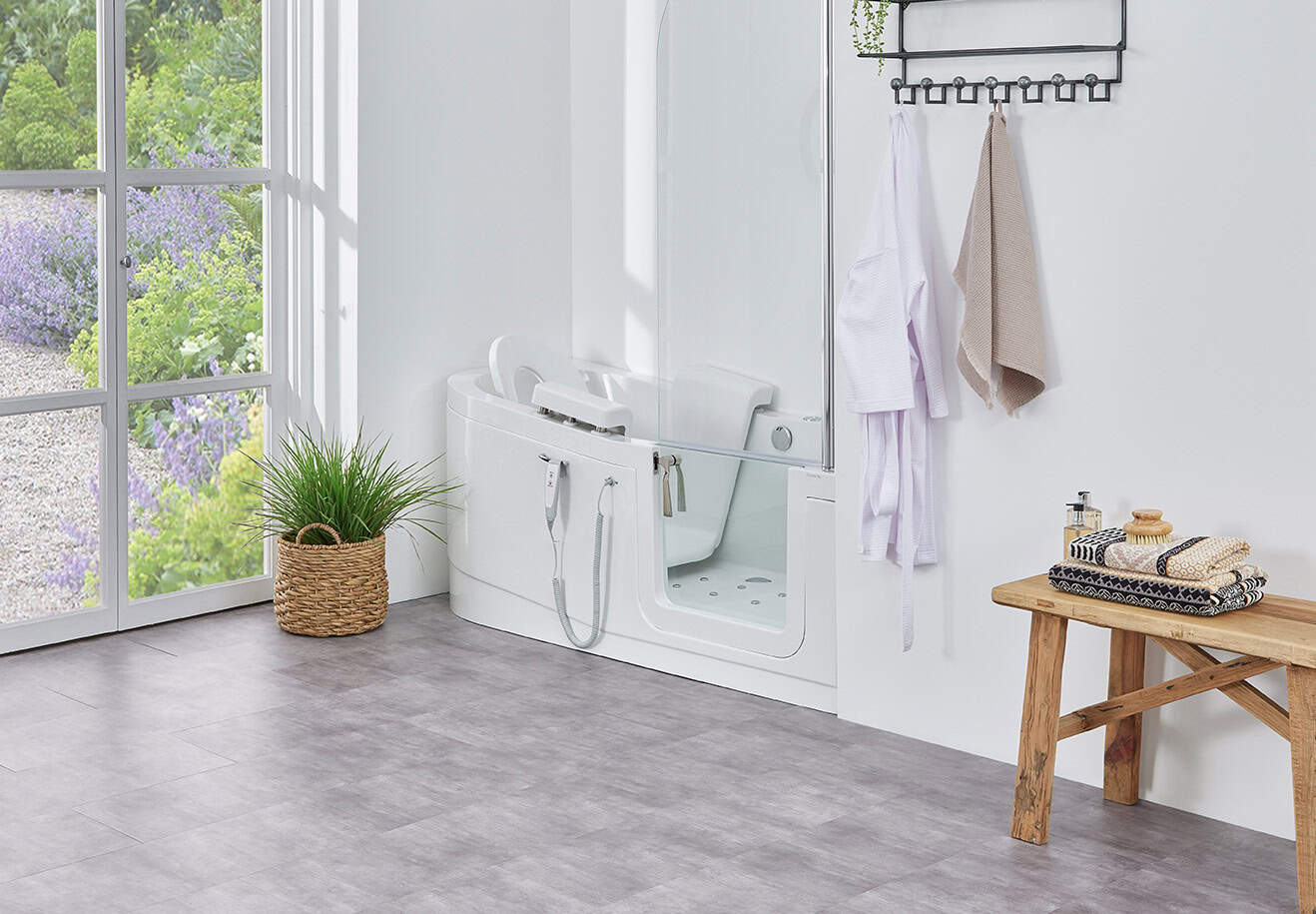
A walk-in bath is designed with a watertight door built into the side of the bath. Rather than having to lift your leg up and over a high side panel, you simply open the door, step in over a very low threshold (usually just a few centimetres), sit down, close the door, and then run the water. This low-entry design is the key difference, and it’s what makes a walk-in bath so much safer for people who struggle with balance or flexibility.
Many walk-in baths also include built-in seats, grab rails, non-slip flooring, and easy-to-reach controls, all designed with the user’s comfort and safety in mind. Some models include therapeutic features such as air or water jets, which can be particularly comforting for people with arthritis or muscle pain.
The real advantages of choosing a walk-in bath
The most significant benefit is safety. Climbing in and out of a standard bath is one of the most common causes of falls in the home, particularly for older adults. According to the NHS, falls are the most frequent cause of injury-related deaths in people over 75 in the UK. A walk-in bath removes the need to step over a high side, which dramatically reduces that risk.
Beyond safety, there is the matter of comfort and dignity. Many people who struggle with conventional baths find that a walk-in model gives them back the ability to bathe independently, without needing help from a carer or family member. That sense of privacy and self-reliance can make a real difference to how people feel about their day-to-day life.
For those who enjoy a soak, walk-in baths offer something that walk-in showers and wet rooms cannot quite replicate: the experience of sitting in warm water. This is not simply a matter of preference. Warm water immersion can help ease joint stiffness and muscle aches, which makes a walk-in bath with spa jets particularly appealing to anyone living with arthritis, fibromyalgia, or general chronic pain.
Walk-in baths also tend to be easier to install than full wet rooms, as they fit within the existing footprint of a standard bath. In most cases, they can be plumbed in without major structural changes to the bathroom.
In summary, the main advantages include:
- A very low entry threshold, reducing the risk of slipping or falling when getting in or out.
- A built-in seat and safety rails for added support and comfort during bathing.
- The ability to bathe independently without assistance, helping to preserve dignity and confidence.
- Optional hydrotherapy jets to help soothe aching muscles and joints.
- A familiar bathing experience for people who find showers uncomfortable or difficult to use.
What are the limitations of a walk-in bath?
The most commonly raised concern is the filling and draining process. Because the door must be closed before you fill the bath (to keep it watertight), you have to wait while the water fills around you once you’re seated. When you’re finished, you need to drain the water before you can open the door and get out. Some people find this waiting time a little frustrating, and it does mean you may get cold towards the end of your bath if the room is not warm enough.
This is worth thinking about, but there are practical ways to manage it. Choosing a walk-in bath with a fast-fill tap and a quick-release drain can reduce the waiting time considerably. Keeping the bathroom well heated also helps. Many of our customers tell us that, once they’ve got used to the routine, it quickly stops feeling like an inconvenience.
A second consideration is that walk-in baths are generally not suitable for wheelchair users who cannot transfer to a seat independently. If wheelchair access or fully assisted bathing is required, a wet room is usually the better option. We’re always happy to discuss which solution suits a particular set of needs, so if you’re not sure, it’s worth having a conversation before making any decisions.
Finally, walk-in baths do take up similar floor space to a conventional bath, so they are not always ideal in very small bathrooms. That said, manufacturers do offer a range of sizes, and our team can help assess whether a walk-in bath is a practical fit for your existing space.
How does a walk-in bath compare to a walk-in shower or wet room?
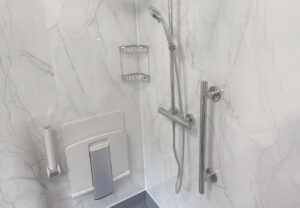
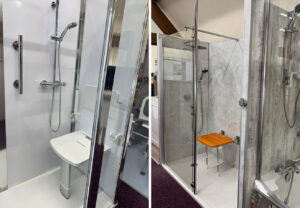
This is one of the questions we hear most often, and the answer genuinely depends on the person. Walk-in showers tend to be quicker and easier to use on a day-to-day basis. There’s no waiting for the water to fill or drain, and they take up less floor space. A well-designed accessible shower with a fold-down seat, thermostatic controls, and a low-profile tray can be an excellent choice for many people.
Wet rooms go a step further, removing the shower tray entirely to create a fully level-access bathroom. They are the most accessible option overall and are particularly well suited to people who use wheelchairs or who need assistance from a carer while bathing.
The walk-in bath sits in a different space from both of these. It suits people who genuinely love bathing and would miss the experience of soaking in warm water, or who find standing in a shower difficult or uncomfortable. For some people, a combination approach works well: an easy-access shower bath, which offers both a shower and a low-access bathing option within the same unit.
Is a walk-in bath a good long-term investment for your home?
A well-fitted walk-in bath from a reputable specialist is a durable and long-lasting addition to your home. It is also worth considering the broader picture: by enabling someone to bathe safely and independently for longer, a walk-in bath can delay or reduce the need for paid care, which has a very real financial value over time.
In terms of property value, the impact varies. In some cases, an accessible bathroom can be a positive feature for buyers who need one. In others, buyers may prefer to return the bathroom to a more conventional layout. It is worth being aware of this if you are thinking about selling in the near future, though for most of our customers, the priority is quality of life at home rather than resale value.
Our showroom near Tamworth is the largest mobility bathroom showroom in the UK, and we always encourage people to come and see the products in person before making a decision. You can try the different door styles, sit in the baths, and get a real sense of what will work for you. We also offer home visits if getting to us is difficult.
Frequently asked questions about walk-in baths
How long does it take to fill and drain a walk-in bath?
Fill and drain times vary depending on the model and your home’s water pressure. A standard walk-in bath might take around 5-10 minutes to fill and a similar amount of time to drain. Models with fast-fill taps and rapid-drain systems can cut this time significantly (often down to a few minutes). It’s one of the things we always discuss with customers when helping them choose a model, as it can make a real practical difference.
Are walk-in baths suitable for people with dementia?
Walk-in baths can work well for people in the earlier stages of dementia, particularly when the design is simple and familiar. Easy-to-use controls, clear markings, and a reassuring routine can all help. However, for those who need close supervision or assistance, a wet room may offer a more flexible and carer-friendly environment. It’s always worth speaking with an occupational therapist as part of the decision-making process.
Can a walk-in bath be installed in a small bathroom?
Walk-in baths are available in a range of sizes, including shorter and narrower models designed for smaller spaces. In many cases, a walk-in bath can replace a standard bath without requiring any major structural changes to the room. A site survey will give you a clear idea of what is and isn’t possible in your particular bathroom.
What is the difference between air jets and water jets in a walk-in bath?
Air jet systems blow warm air through small holes in the bath floor and sides, creating a gentle, all-over sensation that many people find relaxing and good for circulation. Water jets are more targeted, directing pressurised water at specific areas such as the back or legs, which can help ease muscle tension and joint pain. Some baths offer a combination of both. If therapeutic benefit is important to you, this is well worth exploring when you visit our showroom.
Who installs walk-in baths, and how long does it take?
Walk-in baths should always be installed by qualified bathroom fitters with experience in accessible bathrooms. At Life Quality Bathing, our own installation teams handle everything from removing the old bath to completing all the plumbing and finishing work. Most installations are completed within one to two days, though this can vary depending on the complexity of the job and any additional work required.