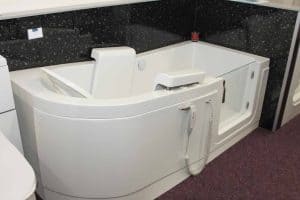
If you or someone you care for is finding it harder to get in and out of a standard bath, you’re not alone. Climbing over a high bath rim is one of the most common causes of bathroom falls in the home, particularly for older adults. A low-entry bath (sometimes called a walk-in bath or easy access bath) is designed to make bathing safer and more comfortable by significantly reducing the height you need to step over to get in.
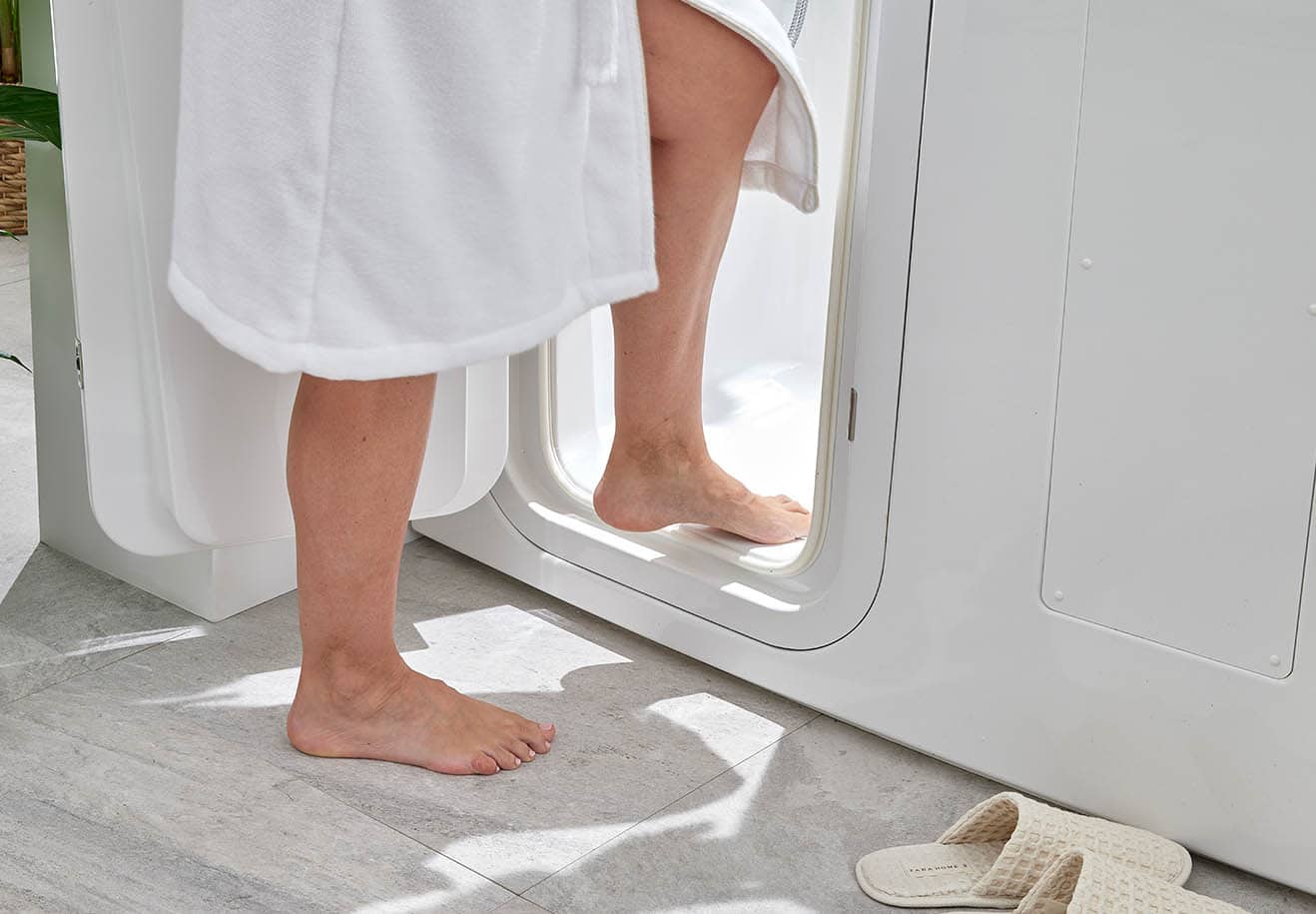
Most low-entry baths combine a reduced threshold with a watertight door built into the side of the bath. This means you open the door, step in with very little height to negotiate, close the door behind you, and then fill the bath. It’s a practical solution that removes one of the most common physical barriers to safe, independent bathing.
In this guide, we’ll explain exactly how low-entry baths work, how they compare to a standard bath, who tends to benefit most, and what to look for if you’re considering one.
How does a low-entry bath differ from a standard bath?
A standard bath typically has a rim height of around 50 to 60 centimetres from the floor. For a younger, fully mobile person, stepping over this is effortless. But for someone with hip or knee problems, poor balance, or reduced strength in their legs, that step can feel precarious, and can easily result in a slip or fall.
A low-entry bath tackles this in two ways. First, the threshold itself is much lower, typically somewhere between 15 and 30 centimetres, and sometimes less. Second, the door means you don’t need to swing your leg over the rim at all. You simply open the door and step straight in, which is a much more natural and controlled movement.
Once you’re inside with the door sealed, you fill the bath as normal. Most low-entry baths are fitted with a thermostatic valve, which regulates the water temperature to prevent scalding while the bath fills around you. When you’re finished, you wait for the water to drain before opening the door to get out. This is worth being aware of before you buy, it’s a slightly different routine to a standard bath, though most people adjust to it quickly.
Are “low-entry bath” and “walk-in bath” the same thing?
Broadly speaking, yes. The terms “low-entry bath”, “walk-in bath”, and “easy access bath” are widely used to describe the same type of product: a bath with a low threshold and a watertight side door. Different manufacturers and retailers may use different names, but the core concept is the same.
Where you might see a genuine distinction is between a low-entry bath (with a door) and a low-level bath, which simply has a lower rim than a standard bath but no door. A low-level bath can make entry a little easier, but you still need to step over the rim, which limits how much it helps for people with significant mobility difficulties. A low-entry bath with a door is generally the more effective solution for anyone who finds the step-over motion genuinely challenging.
If you’re ever unsure what a particular product includes, it’s always worth asking. Our team at Life Quality Bathing is happy to explain exactly what each option involves and help you choose what’s right for you.
Who is most likely to benefit from a low-entry bath?
Low-entry baths are a practical solution for a wide range of people. They tend to be most popular with:
- Older adults who still enjoy a bath but find a standard tub increasingly difficult to manage safely.
- People recovering from surgery, such as a hip or knee replacement, who need easier access during their rehabilitation period.
- Those with arthritis, joint pain, or muscle weakness who struggle with the physical effort of stepping over a high rim.
- Carers who assist someone with bathing and need a setup that is safer and more manageable for both people involved
It’s worth noting that a low-entry bath isn’t exclusively for people with significant disabilities. Many people choose one simply because they want to continue enjoying a bath as they get older, without taking unnecessary risks. Thinking ahead and making adaptations before a problem occurs is a perfectly sensible approach.
What features should you look for in a low-entry bath?
Not all low-entry baths are the same, and quality and design can vary quite a bit. Here are some of the key things to consider.
The door seal is critical. It needs to be reliably watertight, and the locking mechanism should be simple enough to operate with limited hand strength or dexterity. Look for a door that opens outwards if possible, as this tends to make getting in and out easier, particularly for anyone transferring from a wheelchair.
The base should be non-slip, either through a textured finish or the addition of non-slip inserts. This is especially important for anyone with balance concerns.
Built-in grab rails make a real difference, both for getting in and out and for repositioning yourself once inside. Rails should be positioned at a height and angle that feels natural and supportive, not just added on as an afterthought.
A built-in seat is a feature worth considering if lowering yourself to the bottom of the bath is difficult. Some models include powered riser seats, which gently lower and raise you at the touch of a button. This can make a significant difference for people with weak knees or hips.
Finally, think about the overall dimensions and whether the bath will fit comfortably in your existing bathroom. Most low-entry baths are designed to occupy the same footprint as a standard bath, which usually means installation is straightforward. A specialist installer (like our team at Life Quality Bathing) will assess your space and advise on the most suitable options before any work begins.
Could a low-entry bath help you stay independent at home for longer?
Bathroom safety is closely linked to independent living. According to the Royal Society for the Prevention of Accidents, falls in the home are the leading cause of accidental death and injury in the UK, and the bathroom is one of the highest-risk rooms. Adapting your bathroom at the right time (rather than waiting for an accident to happen) is one of the most practical steps you can take.
A low-entry bath, when properly installed and combined with other safety features like grab rails and non-slip flooring, can significantly reduce the physical demands of bathing. For many people, this means being able to continue managing their own personal care without needing assistance, which is something most of us value deeply.
At Life Quality Bathing, we’ve been helping people across the UK adapt their bathrooms for over 25 years. We understand that decisions like this are not just practical, they’re personal. That’s why we offer home visits as well as appointments at our showroom near Tamworth, which is the largest mobility bathroom showroom in the UK. There’s never any pressure, just straightforward advice tailored to your situation.
Frequently asked questions about low-entry baths
How low is the threshold on a low-entry bath?
Most low-entry baths have a door threshold of between 15 and 30 centimetres from the floor, compared to 50 to 60 centimetres for a standard bath rim. Some models go even lower. The exact height varies by model, so it’s worth checking the specifications carefully and, if possible, trying it out in a showroom before you decide.
Do you have to wait for the water to drain before getting out?
Yes – because the door is in the side of the bath, you need to wait for the water to drain fully before you can open it and step out. This is the main practical difference from a standard bath. Most modern low-entry baths are fitted with fast-drain outlets to keep waiting time to a minimum, and some models include a heated seat to keep you comfortable while the bath empties.
Can a low-entry bath be fitted into a standard bathroom?
In most cases, yes. Low-entry baths are generally designed to fit the same footprint as a conventional bath, so they can usually be installed in the same space without major structural changes. A professional installer will assess your bathroom beforehand to confirm this and flag any adjustments that might be needed.
Is a low-entry bath suitable for someone who uses a wheelchair?
A low-entry bath can work well for some wheelchair users, particularly models with an outward-opening door that allows for a side transfer. However, for those who need fully level access, a wet room is often a more practical solution. Our team can talk through the options with you and recommend the best fit for your circumstances.
What is the difference between a low-entry bath and a low-level bath?
A low-entry bath has both a reduced threshold and a watertight door, so you don’t need to step over the rim at all. A low-level bath simply has a lower rim than a standard bath, but no door, you still need to step over the side to get in. For anyone who finds that stepping motion genuinely difficult or risky, a low-entry bath with a door is generally the safer and more accessible choice.
Are low-entry baths safe for elderly people living alone?
A well-designed low-entry bath, properly installed with appropriate grab rails and a non-slip base, is considerably safer than a standard bath for an older person. However, no bath is entirely without risk, particularly for someone living alone. It’s worth considering whether additional safety measures (such as a personal alarm or a thermostatic valve to prevent scalding) would give added peace of mind.