For many of us, the bathroom is where independence begins and ends each day. It’s where we start our mornings and wind down at night. But for older adults or those living with reduced mobility, it can also be the room where confidence starts to slip. A wet floor, a slippery bath edge, or a tap that’s difficult to grip can quickly turn a simple routine into something that feels uncertain or even unsafe.
The good news is that it doesn’t have to be that way. There is a wide range of bathroom products specifically designed to help people stay safe, comfortable, and independent in their own home for longer. Some of these are small, affordable additions. Others are more significant changes to the bathroom itself. Either way, they can make a real difference to daily life.
Here, we look at the most effective bathroom products for maintaining independence, what they do, and who they’re most likely to help. If you’re exploring options for yourself or a loved one, this guide is a good place to start.
Could grab rails be the single most important addition to any bathroom?
Grab rails might seem simple, but they’re genuinely one of the most effective products available for reducing the risk of falls in the bathroom. Positioned at the right points, such as beside the toilet, at the entrance to the shower or bath, or along a wall, they give you something solid to hold onto when you need it most.
Falls in the home are one of the leading causes of serious injury among older adults in the UK. According to the NHS, falls are the most common cause of injury-related death in people over 75. The bathroom, with its hard surfaces and water, presents a particular risk. A well-placed grab rail costs relatively little and can prevent an enormous amount of harm.
We always recommend professionally fitted rails rather than suction-cup alternatives, which are not designed to bear body weight. Properly fitted rails, anchored securely into the wall, give you real, reliable support.
Why non-slip flooring deserves more attention than it usually gets
Bathroom floors become hazardous the moment they get wet. Standard ceramic or porcelain tiles, while attractive, can be surprisingly slippery underfoot. For anyone with reduced balance or mobility, this creates a serious risk every single day.
Non-slip bathroom flooring is available in a range of styles and materials that look just as good as traditional options while providing much better grip. Wet room flooring, in particular, is designed to drain properly and maintain traction even when wet. It’s a practical solution that works quietly in the background, reducing risk without drawing attention to itself.
When we design an accessible bathroom, flooring is always part of the conversation. It’s not an afterthought; it’s a safety feature. The right floor covering can make the difference between a bathroom that feels secure and one that feels precarious.
How a walk-in shower can transform the daily routine
For many people, the biggest challenge in the bathroom is getting in and out of the bath. A standard bath requires you to step over a high edge, lower yourself down, and then get back up again, all on a wet, hard surface. For anyone with stiff joints, limited strength, or balance issues, this is not just difficult; it can be genuinely dangerous.
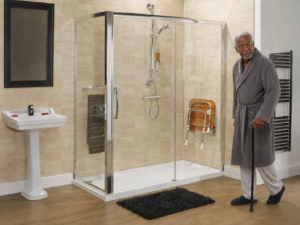
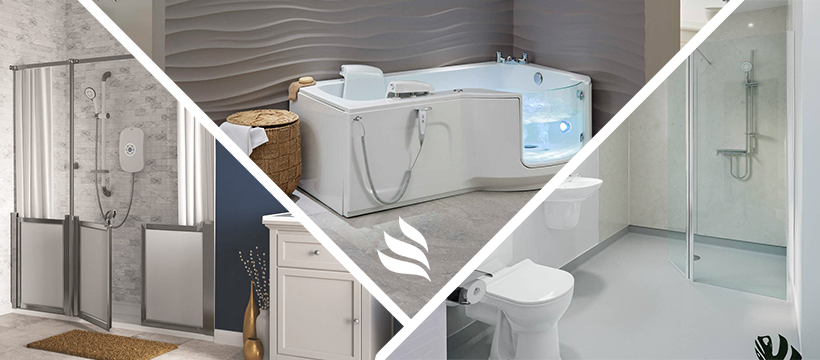
A walk-in shower with a low-profile or level-access tray removes that barrier entirely. You step in rather than climb in, which is a straightforward but significant change. Add a fold-down shower seat, and you have a solution that allows someone to wash comfortably while seated, reducing the risk of slipping or overbalancing.
Our walk-in showers can be designed around your specific needs. A handheld showerhead, for example, gives you much more control over where the water goes and makes washing easier whether you’re standing or seated. Thermostatic shower controls let you set the temperature in advance, so there’s no risk of accidentally scalding yourself while adjusting the water.
Many of our customers tell us that switching to a walk-in shower was the change that made the biggest difference to their confidence in the bathroom. It’s not about making things look adapted; it’s about making them work better.
What makes a walk-in bath different from a standard bath?
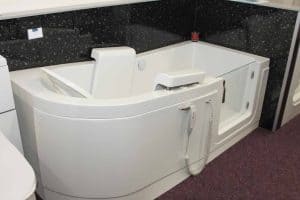
Some people love a bath and don’t want to give that up. A walk-in bath makes bathing accessible again by incorporating a door in the side of the bath, so you step in rather than climbing over the side. Once you’re seated inside with the door closed, the bath fills around you.
Walk-in baths are available with a range of optional features, including spa jets, contoured seating, and easy-to-use tap controls. The low step-in height and secure seating make the experience of bathing much safer, and many people find a warm bath with gentle hydrotherapy particularly helpful for aching joints or muscles.
It’s worth noting that walk-in baths do require a degree of patience; you must wait for the bath to fill after you’ve stepped in, and drain before you step back out. For some, that’s a small price to pay for being able to enjoy a proper soak safely. For others, a walk-in shower might be a more practical day-to-day choice.
Is a wet room the right solution for wheelchair users or those needing assisted bathing?
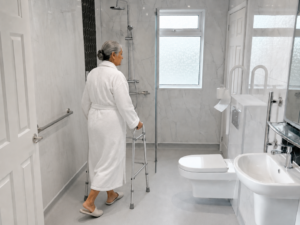
A wet room is a fully waterproofed bathroom where the shower area is open and level with the rest of the floor. There is no tray to step over, no screen to navigate, and no awkward thresholds. For wheelchair users, or for those who need a carer to help them wash, a wet room can provide the most accessible and practical solution of all.
Because the whole floor is designed to drain water away, the room works as a shower space without dividers or cubicles. This makes manoeuvring a wheelchair straightforward, and gives a carer the space they need to assist comfortably and safely.
Wet rooms do require careful installation to ensure the waterproofing is done correctly and the floor gradient directs water to the drain properly. This is why choosing an experienced, accredited installer matters. At Life Quality Bathing, we’ve been designing and fitting wet rooms for over 25 years, and we carry out every installation to the highest standard.
Which smaller products make a meaningful difference day to day?
Not every helpful product requires a full bathroom renovation. There are several smaller additions that can make the bathroom significantly easier and safer to use. The following are among the most commonly recommended:
- Raised toilet seats, which reduce the distance you need to lower yourself and make standing back up much easier.
- Lever-style taps and mixer taps, which are far easier to use than traditional round knobs, particularly for anyone with arthritis or reduced grip strength.
- Bath boards and bath seats, which allow someone to sit on the edge of the bath and slide in, rather than lowering themselves from a standing position.
- Handheld showerheads, which offer flexibility for bathing seated or when movement is limited.
- Non-slip bath mats, which provide an additional layer of grip inside the bath or on the shower tray.
These products work best when they’re chosen with your specific situation in mind. What helps one person may not suit another. A home visit from one of our specialists is a great way to get tailored advice without any pressure.
How the right bathroom can help you stay in your own home for longer
The bathroom is often cited as one of the main reasons people feel they can no longer manage at home. Difficulty washing independently, fear of falling, or simply finding the daily routine exhausting can all contribute to a loss of confidence that sometimes leads to conversations about moving into care.
The right bathroom adaptations can change that. When your bathroom works with you rather than against you, the whole experience of living at home shifts. Routines feel manageable, confidence returns, and the sense of independence that matters so much to most of us is preserved for longer.
We have worked with thousands of customers across the UK over the past 25 years. Many tell us that having their bathroom adapted was one of the best decisions they made, not just for safety, but for their quality of life. If you’d like to explore what might work for you, our showroom near Tamworth is the largest mobility bathroom showroom in the UK, and we also offer home visits for those who find it easier to talk through their options in their own home.
Frequently asked questions about staying independant longer
What is the most important bathroom product for preventing falls?
Do I need to replace my whole bathroom, or can I make smaller changes?
Not necessarily. Smaller additions such as raised toilet seats, lever taps, grab rails, and non-slip mats can make a real difference without any major work. That said, if the layout or design of your bathroom makes it genuinely difficult to use safely, a more significant adaptation such as replacing a bath with a walk-in shower may be worth considering for the longer term.
What is the difference between a walk-in shower and a wet room?
A walk-in shower typically has a low-profile tray and may include a screen or open entry point. A wet room has no tray at all; the floor is fully waterproofed and drains flat, making the entire floor level from one end of the room to the other. Wet rooms are generally the most accessible option, particularly for wheelchair users or those needing assisted bathing, because there are no thresholds to navigate.
Are walk-in baths practical for everyday use?
Yes, though they do require a slightly different routine. Because the door seals when you’re inside, you need to sit down before the bath fills and remain seated until it drains before you stand up. For those who enjoy a long soak and want to continue bathing safely, a walk-in bath is an excellent choice. For those who prefer a quicker daily wash, a walk-in shower may be more convenient.
How do I know which products are right for my situation?
The best starting point is a conversation with a specialist who can assess your specific needs. At Life Quality Bathing, we offer consultations both at our showroom near Tamworth and via home visits, so we can understand your bathroom layout and your daily requirements before making any recommendations. There is no obligation to proceed, and we never use high-pressure sales tactics.
How long does it take to have an accessible bathroom installed?
Most accessible bathroom installations are completed within a few days, though more complex projects such as full wet rooms may take a little longer. We always discuss timelines with our customers in advance, so you know exactly what to expect. Our installation teams are experienced, tidy, and respectful of your home throughout the process.