If you or someone you care for struggles with balance, getting in and out of a conventional bath can feel genuinely risky. Climbing over a high bath side requires a combination of strength, co-ordination, and stability that many people find increasingly difficult as they get older. It only takes one moment of unsteadiness for a fall to happen, and bathrooms are one of the most common places where falls occur at home.
Walk-in baths are designed specifically to address this problem. Rather than stepping over a raised edge, you open a watertight door in the side of the bath, step straight in, sit down, and then fill the bath around you. It sounds simple, and it is. But for someone with poor balance or limited mobility, that one change can make an enormous difference to how safe and confident they feel.
So, are walk-in baths genuinely suitable for people with balance problems? The short answer is yes, in the right circumstances. But there are some important things to consider before choosing one. This article walks you through everything you need to know.
Why balance problems make standard baths so hazardous
The Royal Society for the Prevention of Accidents (RoSPA) has long highlighted the bathroom as one of the highest-risk rooms in the home for older adults. Wet, hard surfaces combine with the physical demands of bathing to create a difficult environment for anyone whose balance is not what it once was.
Conditions that commonly affect balance include inner ear problems, Parkinson’s disease, stroke recovery, arthritis, diabetes-related nerve damage, and the general decline in muscle strength and co-ordination that comes with age. Many people with these conditions still want to enjoy a bath rather than a shower, and a walk-in bath can make that possible.
The key issue with a conventional bath is the step-over height. Most standard baths have a side that sits around 50 to 60 centimetres from the floor. Lifting one leg that high while balancing on the other, often on a wet floor, is where accidents tend to happen. A walk-in bath removes that obstacle entirely.
What features of a walk-in bath help with balance and stability?
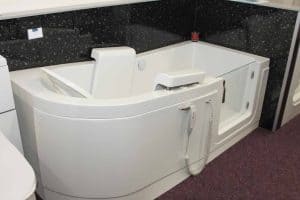
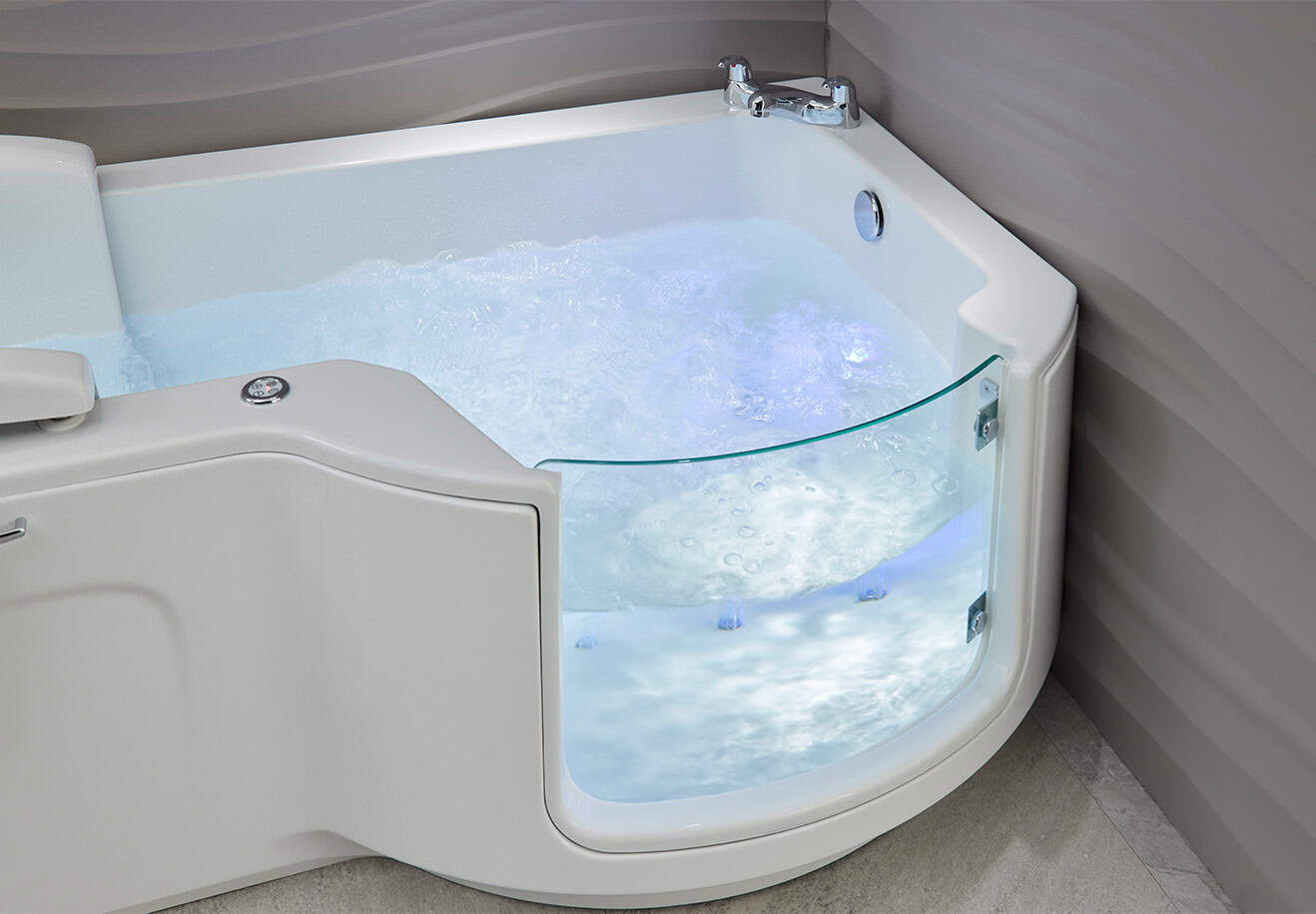
Walk-in baths come with a range of features that are specifically designed to support people with mobility and balance challenges. The low-access door threshold is the most obvious, but there is much more to it than that.
Some of the most useful features include:
- Inward-opening or outward-opening watertight doors with a low step-in threshold, typically as little as 10 centimetres from the floor.
- Built-in grab rails positioned at natural points for lowering yourself in and standing back up.
- A contoured seat that allows you to sit down securely before the bath fills, rather than having to lower yourself to the floor.
- Anti-slip bases and textured surfaces that reduce the risk of slipping once inside.
- Easy-to-reach controls that do not require awkward reaching or twisting to operate.
Together, these features create a bathing environment that works with your body rather than against it. You are seated for the majority of the experience, which takes the pressure off your balance and reduces the risk of a fall significantly.
Is there anything to be aware of before choosing a walk-in bath?
Walk-in baths are excellent for many people, but they do work slightly differently to a conventional bath, and it is worth understanding that before you decide. Because the door must be closed before you fill the bath, you need to sit inside while the water comes in around you. Similarly, when you are ready to get out, you drain the bath first and then open the door. This means you will spend a few minutes waiting for the bath to fill and later to empty.
For most people, this is not a problem at all. In fact, many find it rather pleasant to sit quietly while the bath fills. But it is worth knowing about in advance, particularly for anyone who feels the cold easily. Pairing a walk-in bath with a good thermostatic system and towel rail can help here.
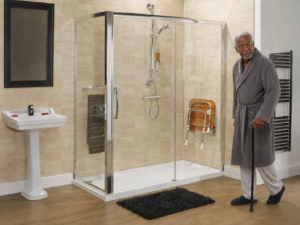
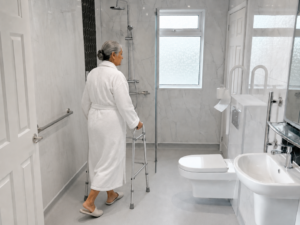
It is also worth thinking about whether a walk-in bath or a walk-in shower (or possibly a wet room) is the better fit for your situation. People with very severe balance problems or those who use a wheelchair may find a level-access shower or wet room easier to use than a bath. If you are not sure which option suits you best, we offer a free consultation either at our showroom near Tamworth (the largest mobility bathroom showroom in the UK) or in your own home, so you can talk it through with someone who really knows this area.
How a walk-in bath can restore confidence and independence
One thing that is easy to overlook when talking about bathroom adaptations is the emotional side. When someone starts to feel unsafe in the bath, they often simply stop using it. They switch to quick showers (which can present their own challenges), or they rely on a carer or family member to help them. That loss of privacy and independence can have a real impact on a person’s wellbeing and confidence.
A well-designed walk-in bath gives people back the ability to bathe independently and safely, without needing to ask for help. For many of our customers, that is not a small thing. It is a return to a daily routine they had quietly given up on, and the difference it makes to how they feel about themselves day to day is something they often tell us about.
With over 25 years of experience installing mobility bathrooms across the UK, we have seen first-hand how the right bathroom adaptation can change things for people. The goal is never just to make a bathroom safer. It is to help people live well in their own homes for as long as they want to.
What should you look for in a walk-in bath installer?
Not all bathroom fitters have experience with mobility bathrooms, and this is a specialist area. Walk-in baths need to be installed correctly so that the door seal is watertight, the bath is properly supported, and all the safety features work as they should. It is always worth choosing a company with recognised accreditations and a track record in this specific field.
We are independently accredited by Checkatrade, The Guild of Master Craftsmen, Trustatrader, and Which? Trusted Trader. These are not badges we carry lightly. They mean we have been vetted, reviewed, and held to a standard by independent organisations, so you can feel confident in the quality of what you are getting.
If you would like to see what a walk-in bath looks and feels like before committing to anything, you are very welcome to visit our showroom or ask about a home visit. We never use high-pressure sales tactics, and we are always happy to answer questions without any obligation.
Frequently asked questions
Can I use a walk-in bath if I have Parkinson’s disease?
Many people with Parkinson’s disease use walk-in baths successfully. The low-threshold door and built-in seat mean there is far less need for the kind of controlled movement and balance that Parkinson’s can make difficult. That said, everyone’s situation is different, and it is worth talking through your specific circumstances with a specialist before making a decision. We are always happy to have that conversation.
Are walk-in baths safe if I fall inside the bath?
Walk-in baths are designed to reduce the risk of falling significantly, but no bathroom can be entirely risk-free. The anti-slip base, contoured seat, and grab rails all help to keep you stable while you are inside. Many walk-in baths can also be fitted with emergency call systems or panic buttons as an added precaution. If you have concerns about what would happen in an emergency, this is worth discussing with your installer.
How long does the bath take to fill and empty?
This depends on your water pressure and the capacity of the bath. Most walk-in baths fill in around five minutes and empty in a similar time. Modern models are often fitted with fast-drain systems to reduce waiting time down to a few minutes. It is worth asking about this when you are choosing your bath, particularly if sitting in a cooling bath is a concern.
Is a walk-in bath better than a walk-in shower for someone with balance problems?
Both can work well, and the right choice depends on the individual. Walk-in baths are ideal for people who enjoy soaking in the bath and want to continue doing so safely. Walk-in showers and wet rooms tend to be better for people who prefer a quick wash, or who need assistance from a carer. If you are unsure, a chat with one of our specialists can help you weigh up which option suits your lifestyle and mobility needs best.
Can a walk-in bath be installed in my existing bathroom?
In most cases, yes. Walk-in baths come in a range of sizes and can often be fitted into the space where a conventional bath already sits. In smaller bathrooms, there may be some additional work involved, but our team will assess the space before any work begins. We offer home consultations so you get an accurate picture of what is involved before you commit to anything.
How do I know if a walk-in bath installer is trustworthy?
Look for independent accreditations from recognised organisations such as Checkatrade, Which? Trusted Trader, or The Guild of Master Craftsmen. These schemes involve background checks, customer reviews, and ongoing monitoring, so they offer a genuine level of assurance. It is also worth reading customer reviews and asking the company how long they have been working specifically in mobility bathrooms. Experience in this specialist area matters.