For many older people, getting in and out of a traditional bath becomes one of the more challenging parts of the day. The high sides, the slippery surfaces, and the effort required to lower yourself down and then push back up again can make bathing feel daunting rather than relaxing. If you or someone you care for has started to find the bath a struggle, you are certainly not alone.
The good news is that there are accessible bathing solutions specifically designed to make this daily routine safer and more comfortable. The most popular of these is the walk-in bath, which removes the need to step over a high side and instead lets you enter through a watertight door. In this guide, we explain what makes a bath genuinely easy to get into, what options are available, and how to choose the right one for your needs.
At Life Quality Bathing, we have been helping people across the UK find the right accessible bathing solutions for over 25 years. Whether you are considering your own comfort and safety, or looking for options on behalf of an elderly parent or relative, we hope this article gives you the clear, honest information you need.
Why do traditional baths become harder to use as we get older?
Standard baths typically have sides around 50 to 55 centimetres high. To get in, you need to swing one leg over, balance on one foot, then lower yourself down using your arms and legs. To get out, you need to do the reverse, often pushing up from a wet, smooth surface with reduced grip. For anyone with reduced strength, stiff joints, or balance problems, this sequence carries a real risk of slipping or falling.
According to the NHS, falls are the most common cause of injury-related deaths in people over 75 in the UK. Bathrooms are one of the highest-risk areas in the home, largely because of wet, slippery surfaces and the physical demands of getting in and out of the bath. Reducing that risk does not mean giving up bathing altogether. It means finding a smarter solution.
Conditions such as arthritis, hip or knee replacements, Parkinson’s disease, and general age-related muscle weakness can all make standard baths harder to manage safely. Many people find the problem creeps up gradually. They manage fine for years, then one day realise they are struggling to get out, or that they have been avoiding the bath entirely. That is often the point at which people start exploring alternatives.
What makes a walk-in bath the easiest option for most people?
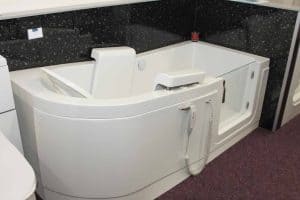
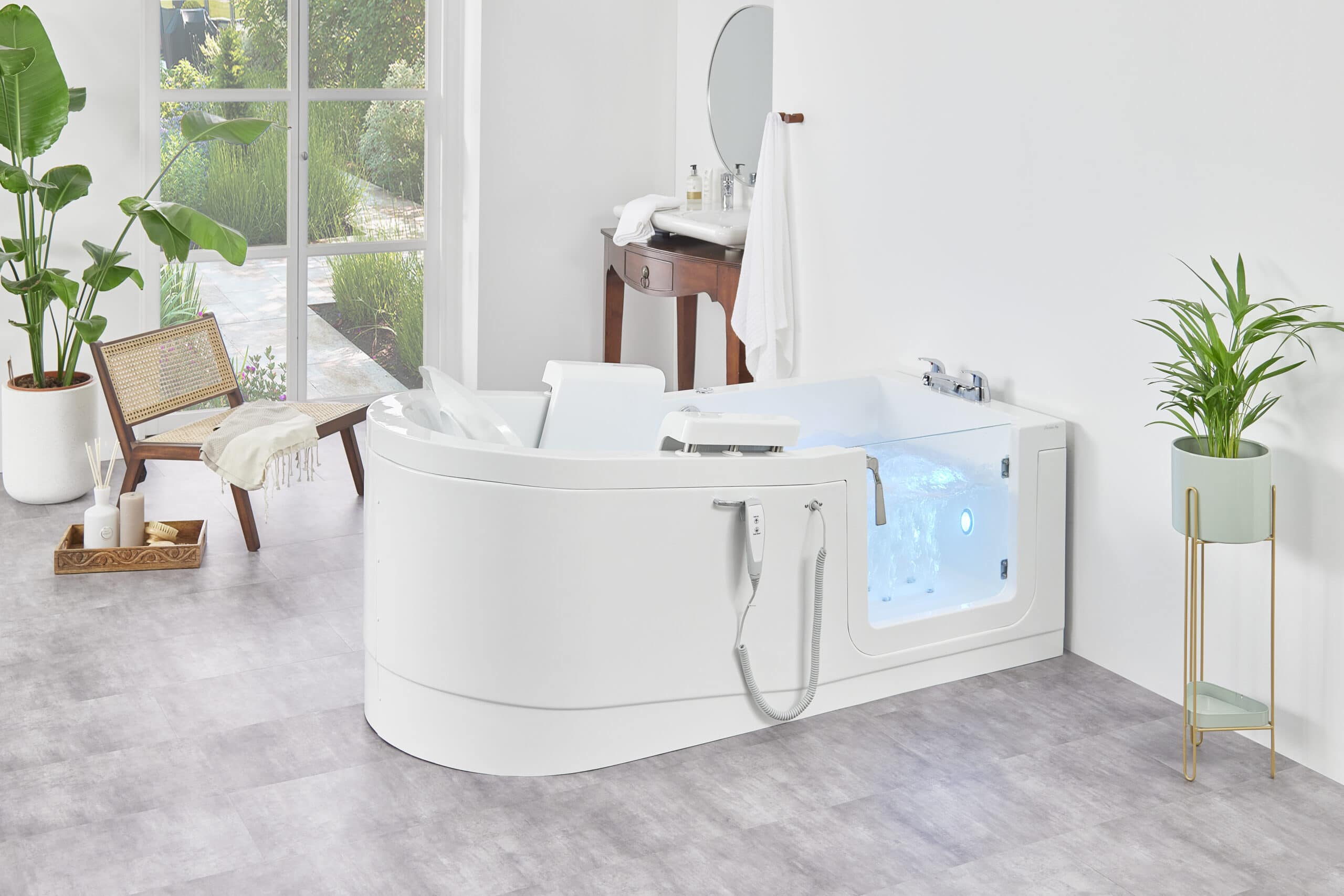
A walk-in bath is designed from the ground up to make bathing safer and more accessible. The defining feature is a low-level door built into the side of the bath. Instead of stepping over a high side, you simply open the door, step in, sit down, close the door, and then fill the bath. The access threshold on our walk-in baths is typically just 18 centimetres or lower, compared to around 50 centimetres on a standard bath. That difference is significant when your joints are stiff or your balance is not what it was.
Walk-in baths also come with built-in seats, so there is no need to lower yourself all the way to the bath floor. You sit at a comfortable height throughout, which makes the whole experience far less physically demanding. Combined with grab rails, non-slip flooring, and thermostatic controls to prevent scalding, a well-designed walk-in bath addresses most of the risks associated with traditional bathing.
Many of our customers tell us that switching to a walk-in bath gave them back a sense of independence they thought they had lost. Being able to bathe without having to ask for help, or without worrying about whether they can get back out, makes a real difference to daily confidence and wellbeing.
Are there other accessible bathing options worth considering?
Walk-in baths are the most popular choice for people who want to continue having a bath, but they are not the only option. If you prefer showering, a walk-in shower or wet room can offer a similarly safe and accessible experience. Here is a brief overview of the main alternatives:
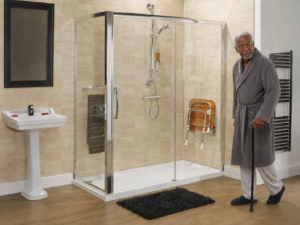
- Walk-in showers with a low or flush access threshold, fold-down seat, and grab rails are ideal for people who shower rather than bathe. They are easy to enter and exit, and the fold-down seat means you can bathe comfortably without standing for long periods.
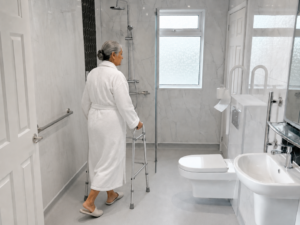
- Wet rooms are fully level-access bathrooms where there is no tray or step at all. The entire floor is waterproofed and drains away. These are particularly useful for wheelchair users or those who need full assistance from a carer.
- Easy access shower baths are a hybrid solution that combines the look of a conventional bath with an accessible shower area at one end. They suit people who want the option of both bathing and showering in the same space.
The right solution depends on your specific mobility needs, the layout of your bathroom, and personal preference. Our team can visit your home to assess the space and talk through the options with you, or you are welcome to visit our showroom near Tamworth, which is the largest mobility bathroom showroom in the UK.
What features should you look for in an accessible bath?
Not all walk-in baths are equal. When comparing options, there are several features worth paying close attention to. The height of the access threshold matters most: the lower it is, the easier and safer the entry. Look for a threshold of no more than 20 centimetres, and ideally lower.
The door seal is another important consideration. Walk-in bath doors seal from the inside, which means you fill the bath after you get in and drain it before you open the door to get out. A good quality door seal prevents leaks and makes the whole process reliable. Our baths are engineered with robust inward-opening doors and watertight seals tested to the highest standards.
Other features to look for include a comfortable, ergonomic seat at the right height, a non-slip floor surface inside the bath, thermostatic taps or controls to prevent hot water burns, and easy-to-reach controls. Some walk-in baths also include hydrotherapy or spa jets, which many users find soothing for arthritis and joint pain.
It is also worth thinking about the fill and drain speed. Because you get into a walk-in bath before filling it, a fast-fill tap means less waiting time in the bath before the water reaches a comfortable level. Similarly, a fast drain means less waiting before you can safely open the door to get out.
How is a walk-in bath installed, and how long does it take?
Having a walk-in bath installed is a straightforward process when you use an experienced specialist. At Life Quality Bathing, our team handles everything from the initial design consultation through to the finished installation. We remove your existing bath, make any necessary adjustments to the plumbing, and fit the new bath to a high standard.
Most walk-in bath installations are completed within one to two days, depending on the complexity of the work and whether any additional work is needed, such as fitting grab rails, new wall boards, or flooring. We use our own trained fitters rather than subcontractors, which means quality and communication remain consistent throughout the project.
We are independently accredited by Checkatrade, the Guild of Master Craftsmen, Trustatrader, and Which? Trusted Trader. These accreditations are not just badges. They reflect a long-standing commitment to doing the job properly, treating customers with respect, and standing behind our work. If you would like to read reviews from past customers, you can find them here.
Could a bath adaptation help you stay independent for longer?
One of the most common things we hear from customers is that they wished they had made the change sooner. For many people, there is a tendency to put off home adaptations, either because it feels like an admission of decline or because the process seems complicated. In reality, a well-designed accessible bathroom can add years of independent living, and the installation process is far less disruptive than most people expect.
Age UK and other organisations working with older people have long highlighted the importance of home adaptations in helping people live safely and independently. A bathroom that works with your body rather than against it is not a luxury. It is a practical investment in your comfort, safety, and confidence.
If you are caring for an elderly parent or relative and are worried about their bathroom safety, a walk-in bath or accessible shower is one of the most impactful changes you can make to their home. It reduces the risk of falls, removes the need for assisted bathing in many cases, and gives both of you greater peace of mind.
Frequently asked questions
What is the minimum step height on a walk-in bath?
Most walk-in baths have an access threshold of between 15 and 20 centimetres. This is considerably lower than the 50 centimetres or more on a standard bath. Our walk-in baths at Life Quality Bathing are designed with as low a threshold as possible to make entry and exit as easy and safe as it can be. During your consultation, we can advise on the specific models best suited to your level of mobility.
Do I have to wait in the bath while it fills and drains?
Yes, because the door seals from inside, you do need to be seated in the bath before filling it, and you need to wait for it to drain before opening the door to get out. This is why fast-fill taps and efficient drainage are so important in a good walk-in bath. Modern walk-in baths are designed to fill and drain as quickly as possible to minimise this wait time. Many people find they simply use the time to relax.
Is a walk-in bath suitable for someone who uses a wheelchair?
For wheelchair users, a wet room is usually the most practical solution, as it provides fully level-access bathing with no threshold at all. A wet room can be designed to accommodate a wheelchair or shower commode, and gives a carer easy access to assist if needed. Walk-in baths can work well for people who are able to walk short distances or transfer from a wheelchair, but a wet room is generally better suited to full wheelchair use.
Will a walk-in bath fit in my existing bathroom?
Walk-in baths are available in a range of sizes, and in many cases they can be fitted into the same space as a standard bath. Our team will measure your bathroom carefully and help you choose a model that fits well and makes the best use of your space. If your bathroom is particularly small, we may suggest a walk-in shower or wet room as a better alternative.
Can I see walk-in baths in person before deciding?
Yes, absolutely. Our showroom near Tamworth is the largest mobility bathroom showroom in the UK, and you are very welcome to visit and see our range of walk-in baths, showers, and wet rooms in person. Being able to sit in a bath, test the door mechanism, and get a real feel for the product makes a huge difference when choosing. You can also arrange a home visit if travelling to the showroom is difficult.