If you or someone you care for is finding it harder to get in and out of a standard bath, you’re not alone. For many older adults, the humble bathtub, which has never been designed with ageing in mind, becomes a source of anxiety rather than comfort. The high sides, slippery surfaces, and awkward lowering and rising required to use one can make an ordinary soak feel like a genuine risk.
The good news is that baths designed specifically for elderly people and those with reduced mobility do exist, and they’ve come a long way. Walk-in baths, in particular, have become an increasingly popular choice across the UK, offering a safer and more comfortable alternative to conventional bathing.
Here’s what you need to know about how they work, who they’re suited to, and whether one might be right for you.
Why standard baths become a problem as we get older
A conventional bath requires you to step over a rim that’s typically around 50 to 55 centimetres high, then lower yourself down and, perhaps more importantly, get back up again. For younger adults with full strength and balance, that’s easy enough. For someone with arthritis, weakened legs, reduced balance, or any condition that affects mobility, it’s a very different matter.
According to the Royal Society for the Prevention of Accidents, the bathroom is one of the most common locations in the home for falls among older people. Wet surfaces, the effort of getting in and out of a bath, and the lack of anything sturdy to hold onto all contribute to that risk. It’s why so many families and carers start looking into alternatives once they notice a parent or relative beginning to struggle.
What exactly is a walk-in bath, and how does it differ from a regular one?
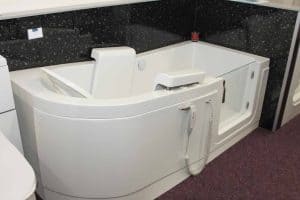
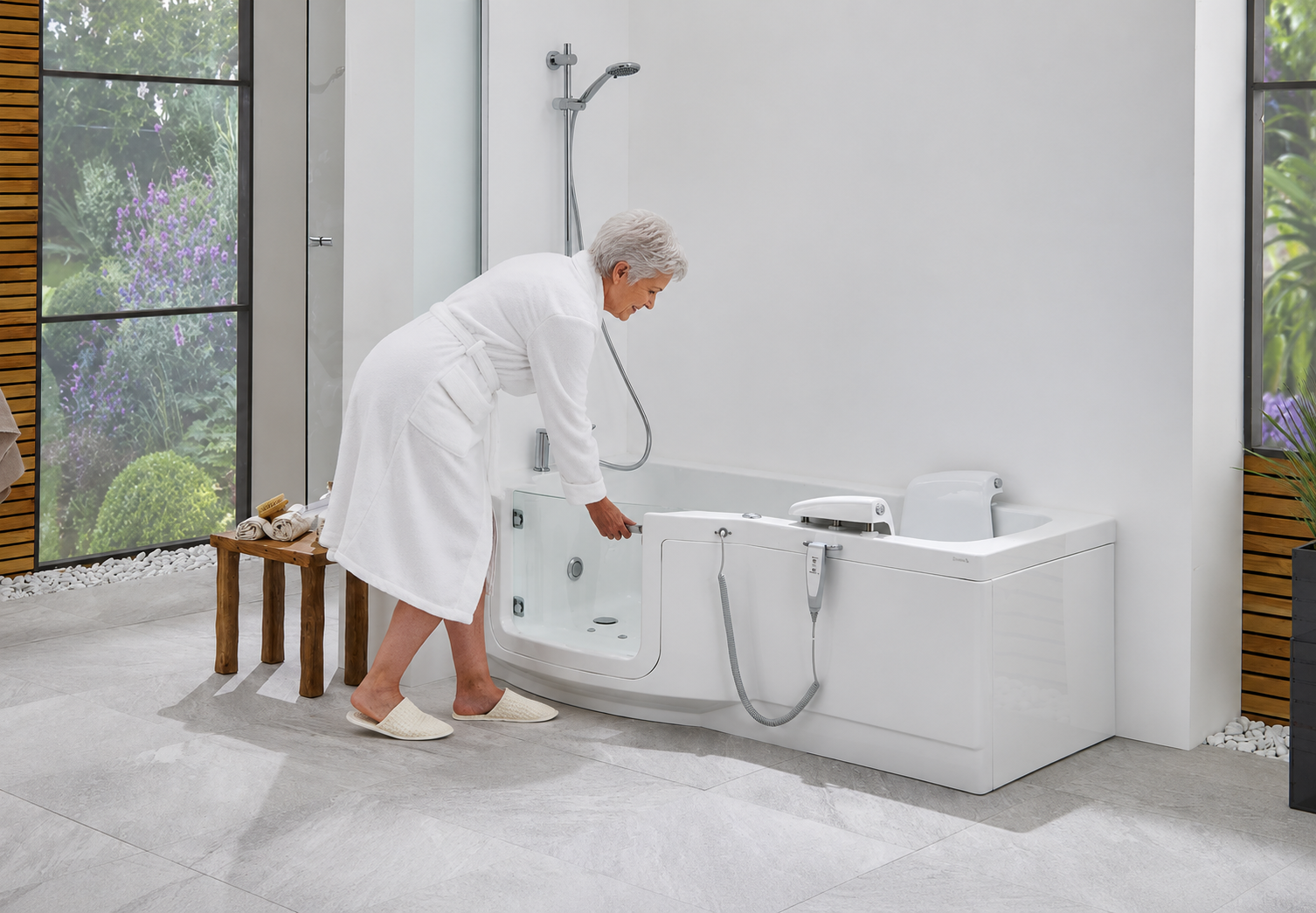
A walk-in bath is a bath designed with a watertight door built into the side, allowing you to step in without having to climb over a high rim. Most models have a very low step threshold, often just a few centimetres, so the risk of tripping is greatly reduced. You open the door, step inside, sit down, close the door, and then fill the bath. When you’ve finished, you drain the water before standing and stepping out.
The door seals securely once closed, so there’s no risk of leaking. Walk-in baths are typically fitted with built-in seats at a comfortable height, grab rails for support, anti-slip flooring on the base, and easy-to-reach controls. Some models also include spa-style features such as hydrotherapy jets or air bubble systems, which can be particularly soothing for people with joint pain or muscle stiffness.
At Life Quality Bathing, we’ve been designing and installing walk-in baths for over 25 years. We see them transform daily routines for our customers, turning something that had become stressful into something to look forward to again.
Who are walk-in baths best suited to?
Walk-in baths are designed for anyone who finds a standard bath difficult or unsafe to use. That includes people with arthritis, hip or knee problems, Parkinson’s disease, balance difficulties, or those recovering from surgery. They’re also a practical choice for anyone who simply wants to continue bathing independently for as long as possible, without relying on help from a carer or family member.
They’re not just for people with significant mobility issues, either. Many of our customers tell us they installed a walk-in bath as a precautionary step, wanting to future-proof their bathroom before any mobility problems became serious. That kind of forward planning makes a lot of sense. Having a bathroom that works for you now, and continues to work for you later, means you’re less likely to face an urgent need for adaptation down the line.
Are there different types of walk-in bath to choose from?
Yes, and it’s worth understanding the options before deciding. The main considerations are the door style and the type of seat.
Most walk-in baths have an inward-opening door, which is the most common design. Some have outward-opening doors, which can make entry easier but require more space in the bathroom. There are also models with a door positioned at the end of the bath rather than the side, which suits some room layouts better.
In terms of seating, some walk-in baths are designed for sitting up rather than lying down, which means they can be shorter in length but deeper in height. These are sometimes called seated or compact walk-in baths, and they work particularly well in smaller bathrooms. Others are closer to a traditional bath shape, allowing you to recline if you prefer.
What about having to wait for the bath to drain before you can get out?
This is one of the most common questions we’re asked, and it’s a fair one. Because you enter the bath before filling it and must drain it before opening the door to exit, there is a short wait involved. For most people, this is simply a matter of adjusting their routine rather than a genuine problem. You fill the bath, enjoy your soak, then allow it to drain before stepping out.
Modern walk-in baths are fitted with fast-drain systems specifically to keep this waiting time to a minimum. Many models drain in just a couple of minutes. If you’re concerned about feeling cold while you wait, some baths include a heated seat or the option to wrap up in a towel or robe while the water clears.
Is a walk-in bath the only bathing option for elderly people?
Not at all. A walk-in bath is one of several accessible bathing solutions, and the right choice depends on your individual needs, your bathroom layout, and your personal preference.
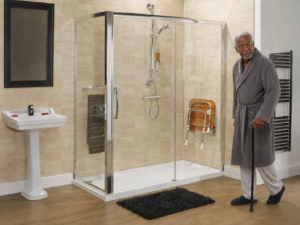
Some people prefer a walk-in shower, which removes the need to step over any kind of rim at all. Walk-in showers can be fitted with fold-down seats, grab rails, and anti-slip trays, making them a safe and comfortable option for people who don’t miss bathing in the traditional sense.
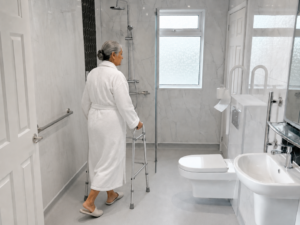
Others prefer a wet room, which is a fully level-access bathroom where the entire floor is waterproofed and drains away. Wet rooms are particularly well suited to wheelchair users or those who need assistance with washing, as there are no barriers to navigate at all.
For those who want the option of both a bath and a shower without giving up too much floor space, an easy access shower bath, which combines a lower-sided bath with a shower area, may be a good middle ground.
At our showroom in Tamworth, which is the largest mobility bathroom showroom in the UK, you can see all of these options in person and get a feel for what would work best in your home. We also offer home visits if getting to us is difficult.
Frequently asked questions
Will a walk-in bath fit in my existing bathroom?
In most cases, yes. Walk-in baths come in a range of sizes, and some compact models are specifically designed for smaller bathrooms. A good installer will assess your space carefully before recommending a product. It’s also worth thinking about whether you’d prefer a door on the left or right side, as that can affect which model works best for your layout.
Are walk-in baths safe for people with dementia?
Walk-in baths can work well for people with mild to moderate dementia, particularly if they are used to bathing and find showers confusing or distressing. The key considerations are simple controls, a clear routine, and supervision where necessary. It’s worth discussing the individual’s specific needs with a specialist who can recommend the most appropriate bathing solution.
Can I get a walk-in bath if I use a wheelchair?
Some wheelchair users do use walk-in baths, but it depends on the level of mobility and whether you can stand to step in. For many wheelchair users, a wet room or level-access shower is a more practical solution, as it allows for assisted bathing without any stepping at all. A home visit from an experienced specialist can help identify the best option for your circumstances.
How long does it take to have a walk-in bath installed?
Most walk-in bath installations are completed within one to three days, depending on the scope of work involved. If tiles need to be replaced, plumbing modified, or other changes made to the bathroom, it may take a little longer. A reputable installer will give you a clear timeframe upfront so you can plan accordingly.
Is a walk-in bath or a walk-in shower better for elderly people?
There’s no single right answer, as it depends on personal preference and mobility needs. Some people love the comfort and warmth of a bath, particularly if they have aching joints, and a walk-in bath allows them to continue bathing safely. Others find a walk-in shower more practical, as there’s no waiting for the water to drain. The best approach is to consider your daily routine, your physical needs, and the size of your bathroom, ideally with guidance from a specialist who can talk through the options with you.