If you or someone you love has started to feel less steady on their feet, the bathroom is often the first place worry creeps in. It’s small, it’s slippery when wet, and it’s a room we all have to use every single day. A walk-in shower with a fold-down seat is one of the simplest, most effective changes you can make to reduce the risk of a fall, and it’s a question we’re asked about constantly at Life Quality Bathing.
The short answer is yes. A walk-in shower with a seat removes many of the everyday hazards that cause falls, from stepping over a high bath edge to standing unsupported while you wash. But it’s worth understanding exactly how and why it helps, so you can decide whether it’s the right change for your home.
Why is the bathroom such a high risk area for falls?
Falls among older people are far more common than most of us realise. NHS guidance confirms that one in three people over 65 will have at least one fall a year, and this rises to around half of people over 80. After the stairs, the bathroom is widely recognised as the most common place in the home for a fall to happen, largely because wet floors, hard surfaces, and the need to balance while bending or stepping combine to create real risk.
The consequences can be serious. Hip fractures and head injuries from bathroom falls often lead to hospital stays, and recovery can be slow. Beyond the physical injury, many people become nervous about using the bathroom alone afterwards, which can chip away at their confidence and independence. This is exactly why a well designed, safer shower matters so much, not just for physical safety but for peace of mind.
How does a fold-down seat actually reduce the risk of falling?
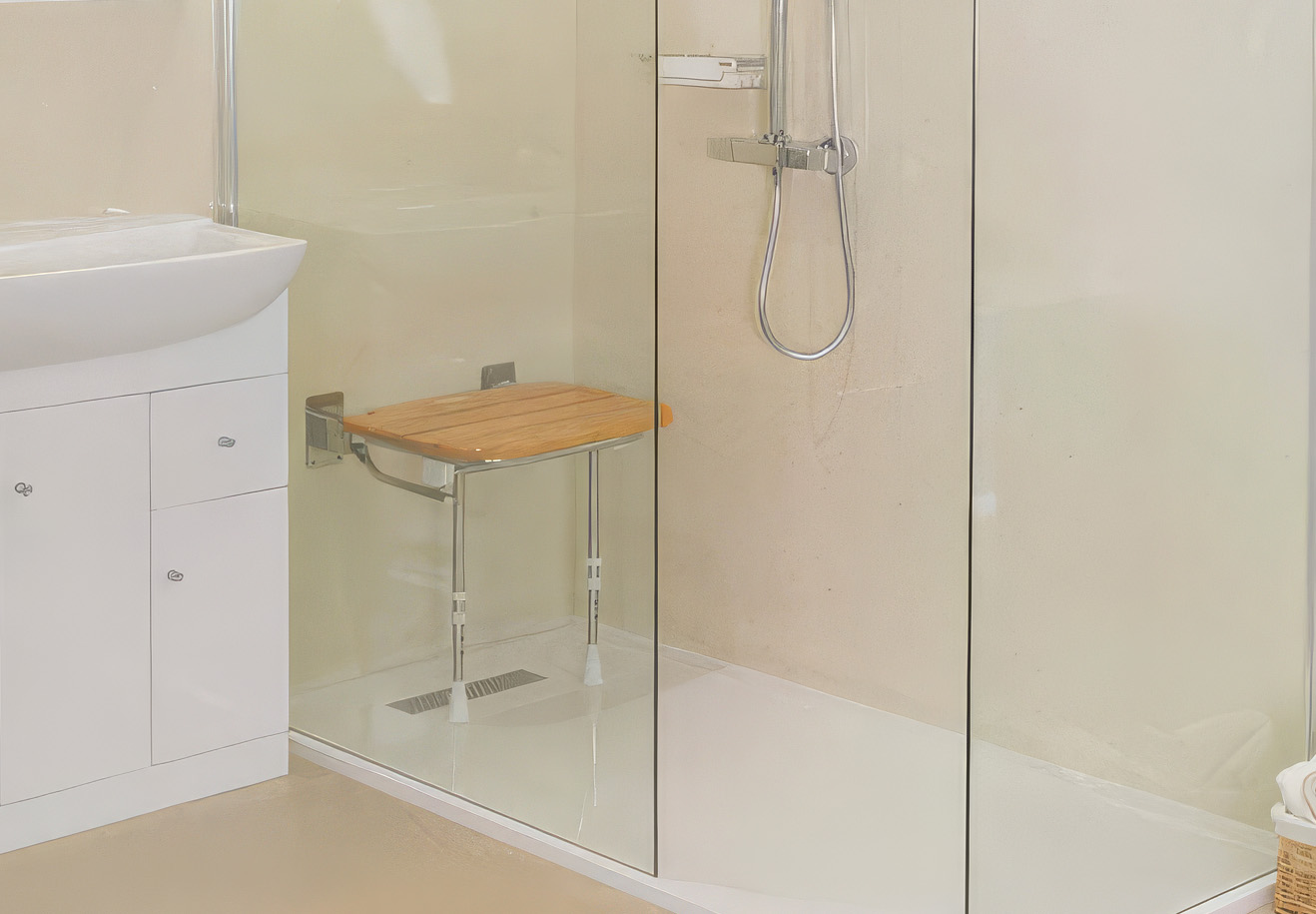
Standing for any length of time takes more balance and strength than most of us give it credit for, especially on a wet surface with soap and shampoo involved. A fold-down seat means you can wash while seated, taking the strain off your legs and removing the need to balance on one foot to wash the other, for example.
It also removes several of the moments where falls tend to happen. There’s no need to stand up quickly from a slippery position, no need to twist awkwardly to reach a shower control, and no long period of standing still while the body tires. For anyone with reduced strength, poor balance, arthritis, or recovering from an illness or operation, this makes a real difference to how safe and how confident they feel.
What makes a walk-in shower different from a standard shower?
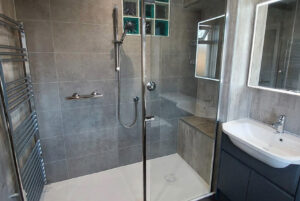
The seat is only part of the picture. A proper walk-in shower removes the shower tray lip or step that so many standard showers still have, replacing it with a low or level threshold that you can walk straight into without lifting your leg high or gripping the frame for balance. Combined with a fold-down seat, grab rails positioned exactly where they’re needed, and an anti-slip shower tray, the whole space is designed around stability rather than just appearance.
At Life Quality Bathing, every walk-in shower we install is fitted around the person using it. That might mean positioning the seat and controls for someone who leads with one side, choosing a riser rail for someone who needs to hold on while sitting or standing, or fitting a thermostatic shower to prevent sudden changes in water temperature which can cause a shock reaction and loss of balance. These small details are often what makes the difference between a shower that looks accessible and one that genuinely is.
A well designed walk-in shower typically includes a combination of the following features, chosen to suit the individual:
- A low or level access threshold, so there’s no step to lift over or trip on.
- A fold-down seat, allowing washing to be done safely while seated.
- Strategically placed grab rails, giving something secure to hold at every stage.
- An anti-slip shower tray, reducing the chance of a slip even when the floor is wet.
- A thermostatic or easy reach shower control, avoiding sudden temperature changes or awkward stretching.
Could a walk-in bath or wet room be a better fit instead?
A walk-in shower with a seat suits most people extremely well, but it isn’t the only option. If someone finds it easier or more comfortable to sit and soak rather than stand or perch, a walk-in bath with a low access door and built-in seat can be a good alternative, particularly for those who value the therapeutic benefit of bathing. For a wheelchair user, or someone who needs a carer to help with washing, a wet room with a fold-down seat gives a fully level, barrier-free floor that removes the shower tray altogether and allows much easier assisted access. We’re always happy to talk through which option best suits your circumstances, rather than assuming one solution fits everyone.
Is it worth adapting a bathroom before a fall happens?
It’s understandable to put off bathroom changes until there’s a clear need, but waiting until after a fall is often the harder path. A fall can mean a hospital stay, a longer recovery, and a real knock to confidence that makes everyday life harder for months afterwards. Making the change beforehand, while someone is still steady enough to manage the transition comfortably, tends to lead to a smoother experience and a bathroom that supports independence for years to come.
With over 25 years of experience designing and installing accessible bathrooms, and accreditation from Checkatrade, The Guild of Master Craftsmen, Trustatrader, and Which? Trusted Trader, we’ve seen first hand how much difference the right shower design makes to someone’s daily life. Visiting our showroom, the largest dedicated mobility bathroom showroom in the UK, or arranging a home visit, lets you see and try the features before deciding what’s right for you.
Frequently asked questions
How much does a walk-in shower with a seat cost?
Costs vary depending on the size of the shower, the features included, and whether other changes are needed to the room, such as flooring or plumbing work. The best way to get an accurate figure is a free, no obligation consultation, either at our showroom or during a home visit, where we can assess your bathroom and talk through what would suit you.
Will a fold-down seat take up too much space in a small bathroom?
Not usually. Fold-down seats are designed to sit flush against the wall when not in use, so they don’t reduce the usable shower space day to day. Even in a compact bathroom, we can usually design a walk-in shower that fits comfortably.
Can a walk-in shower be installed if someone uses a wheelchair?
Yes, though a fully level access wet room is often a better fit for wheelchair users, since it removes the shower tray and any remaining lip entirely. We’d usually recommend discussing your specific mobility needs with us so we can suggest the most suitable layout.
Do grab rails need to be fitted by a professional?
How long does it take to install a walk-in shower?
Many walk-in shower installations can be completed within a few days, depending on the scope of work and whether other elements of the bathroom are being updated at the same time. We’ll always give you a clear timeframe before work begins.