If you’re finding it harder to get in and out of your bath, you’re far from alone. For many people, the standard bath that’s served them perfectly well for decades can start to feel like more of a hazard than a comfort. The good news is that replacing an existing bath with a walk-in bath is not only possible in most homes, but it’s also a straightforward process when carried out by experienced specialists.
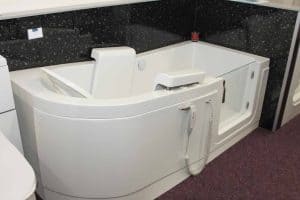
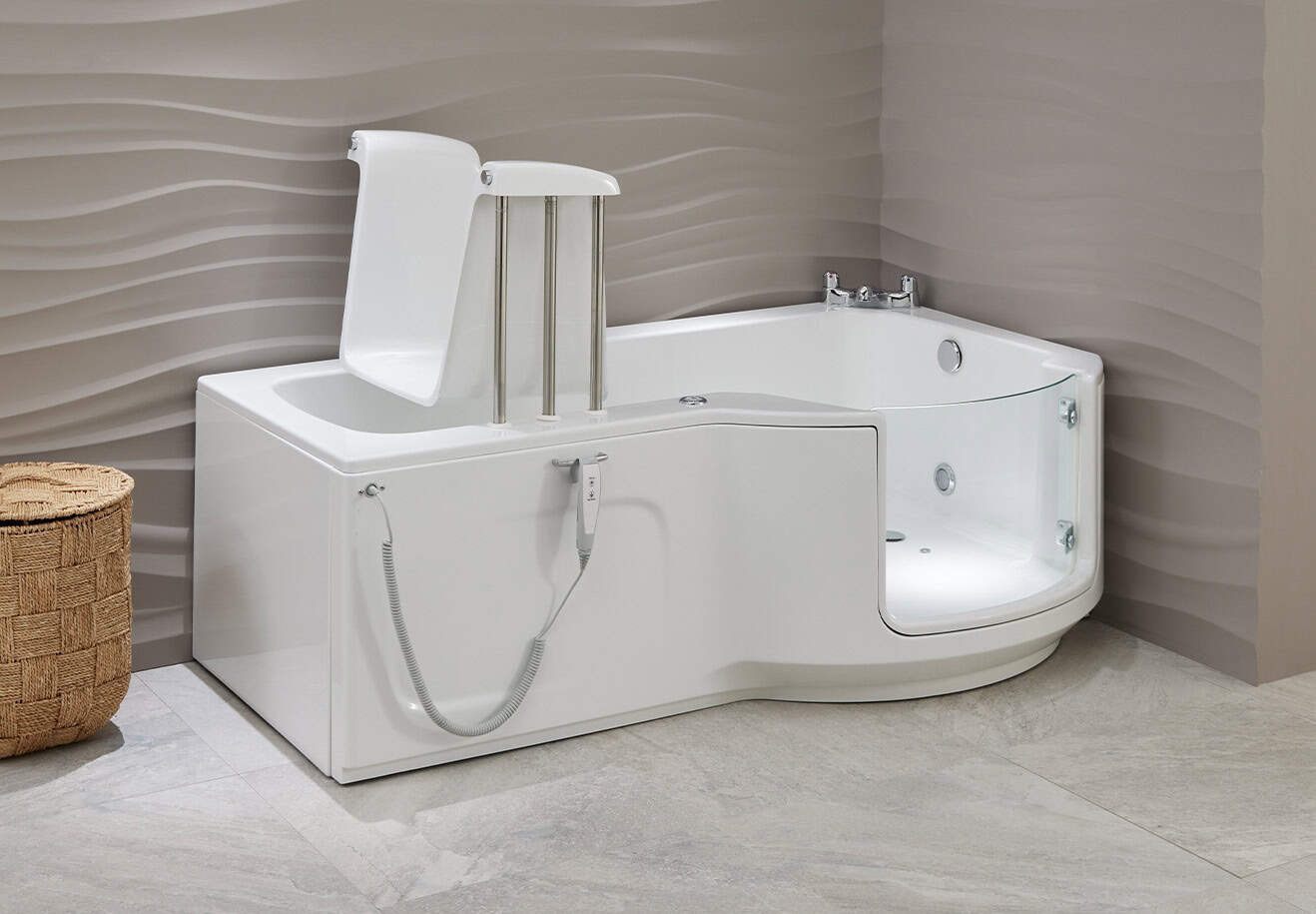
A walk-in bath is designed with a door built into the side, a low-access threshold, and a seat, so you can step in, sit down, and then fill the bath around you. There’s no climbing over a high side, and no awkward lowering yourself down to the floor. For older adults or anyone living with reduced mobility, it can make an enormous difference to both safety and day-to-day confidence.
In this article, we’ll answer the most common questions people have when they start thinking about making the switch, including whether their bathroom is suitable, what the installation process involves, and what to expect in terms of disruption. With over 25 years of experience fitting mobility bathrooms across the UK, we’ve helped thousands of people through exactly this decision.
Will a walk-in bath fit where my current bath is?
This is the question most people ask first, and the answer is that it depends on your bathroom layout, but the majority of standard UK bathrooms can accommodate a walk-in bath without any major structural changes.
Walk-in baths are available in a range of sizes, and many are designed specifically to fit into the same footprint as a standard bath. That said, every bathroom is different, which is why it’s important to have a proper consultation and measurement carried out before anything else happens. At Life Quality Bathing, we offer home visits so one of our team can assess your space in person and advise you on the most suitable options. There’s no obligation, and no guesswork involved.
Factors that affect suitability include the size of the room, the position of your existing plumbing, the location of the door, and whether you need the bath door to open to the left or right. All of these things can be assessed and planned for during the consultation stage.
What does the installation process actually involve?
Many people worry that having a new bath fitted will mean days of disruption, mess, and upheaval. In practice, a straightforward walk-in bath installation is typically completed within one to two days, depending on the complexity of the work involved.
The process generally follows these stages:
- Your existing bath and any surrounding panels or tiling that need to be removed are carefully taken out.
- Any necessary plumbing adjustments are made to suit the position and connections required by the new bath.
- The new walk-in bath is fitted, levelled, and secured in place.
- Surrounding areas are finished with wall panels, tiles, or boarding as agreed, leaving the bathroom clean and complete.
- The full installation is tested before our team leaves, so everything is working exactly as it should.
Our fitters are experienced, tidy workers who will leave your bathroom in a clean and usable condition. We understand that for many of our customers, losing access to the bathroom even for a short time can be a real concern, so we work efficiently and keep disruption to a minimum.
Do I need to make any changes to my plumbing or electrics?
In most cases, existing plumbing can be adapted without significant additional work. Your water supply and waste outlet will generally be in positions that work well for a walk-in bath, and our installation team can make any adjustments needed as part of the fitting process.
If you choose a walk-in bath with powered spa or hydrotherapy features, there may be an element of electrical work required to install the relevant pump or controls. Again, this is something our team will identify and plan for during the consultation, so there are no surprises on installation day. All electrical work is carried out to the relevant safety standards, and everything will be fully tested before completion.
Is a walk-in bath the right choice, or would a walk-in shower work better?
This is a question worth thinking about carefully, and it’s one we’re asked very often. The honest answer is that it depends on the individual.
A walk-in bath is a good choice if you enjoy a soak and want to maintain that part of your routine in a safer, more comfortable way. The built-in seat, door, and low threshold mean you can bathe with much greater ease than in a standard bath. Many of our walk-in baths also feature whirlpool or spa jets, which can be particularly beneficial for people with joint pain or arthritis.
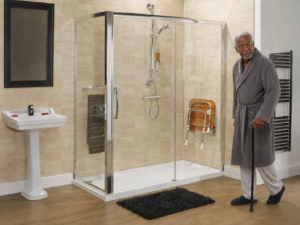
A walk-in shower, on the other hand, tends to suit those who prefer showering, or who find the process of waiting for a bath to fill and then drain (with the door sealed) less appealing. Walk-in showers are also quicker to use day-to-day, which some people prefer.
We also offer easy access shower baths, which combine the features of both. If you’re unsure which solution is right for you or the person you’re helping, our team is very happy to talk it through. You can visit our showroom in Seckington, Tamworth, which is the largest mobility bathroom showroom in the UK, or arrange a home visit at a time that suits you.
How safe are walk-in baths, and what features should I look for?
Walk-in baths are specifically designed with safety in mind, and a good quality model should include a number of features that reduce the risk of slips and falls, which are a leading cause of injury among older adults in the home. According to the Royal Society for the Prevention of Accidents (RoSPA), falls are the most common cause of accidental death in people over 65, and a significant proportion of these happen in the bathroom.
Key safety features to look for include a low-access door threshold (ideally no higher than a few centimetres), a non-slip bath floor, a built-in seat at a comfortable height, and easy-to-operate door locks and taps. Grab rails, either built in or fitted separately, add further security when getting in and out.
One thing to be aware of with walk-in baths is that because the door must be closed before you fill the bath and remains closed until the water has drained, you will spend a short time sitting in an empty bath at the start and end of your wash. This is something to consider if you or the person you’re helping gets cold quickly. A well-insulated bath and a warm bathroom will help, and some models feature rapid-fill taps to minimise waiting time.
Why does it matter who installs your walk-in bath?
Choosing the right company to carry out the work is every bit as important as choosing the right bath. A walk-in bath is a significant investment, and it needs to be installed correctly to function safely and last well.
At Life Quality Bathing, we are independently accredited by Checkatrade, The Guild of Master Craftsmen, Trustatrader, and Which? Trusted Trader. These accreditations aren’t just logos; they mean our work and our business practices have been assessed and verified by independent organisations. They give our customers confidence that they are dealing with a company that takes quality and accountability seriously.
We have been designing and fitting mobility bathrooms for over 25 years, and our team understands not just the technical side of the work, but the importance of getting things right for the people who will be using the bathroom every day. We work with care and respect in people’s homes, and we don’t consider the job done until our customer is completely happy.
Frequently asked questions
How long does it take to have a walk-in bath installed?
In most cases, a walk-in bath installation takes one to two days. The exact timescale depends on the complexity of the work, including whether any additional plumbing or tiling is needed. Our team will give you a clear timeframe before work begins, so you know exactly what to expect.
Will I need to redecorate my bathroom after the installation?
Can a walk-in bath be installed in a small bathroom?
Yes, in many cases. Walk-in baths are available in compact sizes designed to fit into smaller spaces, and some models are specifically made to match the footprint of a standard UK bath. The best way to find out what’s possible in your bathroom is to have one of our team visit and take measurements. We’ll always be honest about what will and won’t work in a given space.
Is a walk-in bath suitable for someone with significant mobility difficulties?
Walk-in baths suit a wide range of mobility needs, but for someone who uses a wheelchair or requires full assistance with bathing, a wet room or level-access shower may actually be more practical. We’ll always recommend the solution that genuinely fits the person’s needs, not just the most popular option. Our team has experience advising on all types of accessible bathing solutions.
What happens if I have a problem with my walk-in bath after installation?
We stand behind the quality of our work and the products we install. After your installation, you’ll have the reassurance of our aftercare and the relevant manufacturer’s warranty on the bath itself. If anything does go wrong, our team is on hand to help. Our accreditations with Checkatrade and Which? Trusted Trader also give you an independent channel to raise any concerns.
Can I see walk-in baths in person before I decide?
Absolutely. We’d encourage it. Our showroom in Seckington, Tamworth is the largest mobility bathroom showroom in the UK, and seeing and touching the products in person makes a big difference when you’re making a decision like this. If visiting isn’t convenient, we can come to you instead. Simply get in touch to arrange a home visit at a time that works for you.