Getting in and out of the bath or shower is something most of us have done without a second thought for most of our lives. But for people living with limited mobility, whether due to age, arthritis, a recent fall, or a longer-term health condition, the bathroom can quietly become one of the most hazardous rooms in the home. Wet surfaces, high bath sides, and slippery floors create a combination that puts many people at real risk each day.
The good news is that bathing safely with limited mobility is entirely achievable. Whether you’re thinking about small practical changes or a more significant bathroom adaptation, there are solutions to suit every situation, budget, and level of need. This guide walks you through the most important things to consider, from quick safety improvements to longer-term options that could genuinely change your day-to-day quality of life.
At Life Quality Bathing, we’ve spent over 25 years helping people across the UK adapt their bathrooms to suit their needs. So whether you’re researching for yourself or on behalf of a loved one, read on for honest, practical advice.
Why is the bathroom one of the most common places for falls at home?
According to the NHS, falls are the most common cause of injury-related deaths in people over 75 in England. A significant proportion of those falls happen in the bathroom. It’s not difficult to see why: hard tiled floors, wet surfaces underfoot, the effort of stepping over a high bath side, and the challenge of lowering yourself down and getting back up again all create opportunities for an accident.
Many people are aware of the risk but continue as they always have, either because they haven’t found a practical alternative, or because they’re reluctant to make changes that feel like an admission of slowing down. That reluctance is completely understandable. But it’s worth remembering that adapting your bathroom isn’t about giving something up. It’s about staying in control.
What simple changes can make an existing bathroom safer right away?
Not every improvement requires major building work. There are a number of straightforward changes that can make a real difference without disrupting your home too much.
- Grab rails and support bars: These can be fitted to walls beside the toilet, bath, or shower to provide a secure handhold when getting up, sitting down, or stepping in and out. They should be professionally installed into wall studs to ensure they can bear weight safely.
- Non-slip bath and shower mats: A simple but effective first step. Look for mats with strong suction cups that grip the floor firmly, even when wet.
- A bath or shower seat: Allowing you to sit while bathing reduces the need for balance and lowers the risk of slipping. Lightweight options that hook over the side of the bath are widely available, and purpose-built shower seats offer a more permanent and sturdy solution.
- A raised toilet seat: Not directly related to bathing, but worth mentioning as part of overall bathroom safety, especially for anyone with hip or knee problems.
These adjustments can be a good starting point, but for many people with more significant mobility challenges, they are only a partial answer. The real difficulty often lies in the design of the bath itself.
Could a walk-in bath be the right solution for you?
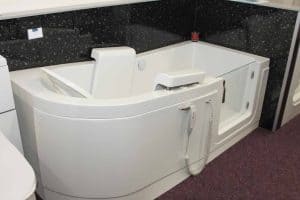
A walk-in bath is designed specifically for people who find it difficult or unsafe to step over a conventional bath side. Rather than climbing in from above, you open a door in the side of the bath, step in at floor level, sit down, and then close the door before filling the water. When you’re done, you drain the bath before opening the door to get out.
This design removes the single biggest risk in a standard bath: the moment of stepping over a high side with one leg while balancing on the other. Walk-in baths are available in a range of sizes and styles, including models with therapeutic spa jets for those who find warm water helpful for joint pain or muscle stiffness.
One thing to be aware of is that you do need to wait for the bath to drain before you can exit. This is a consideration for anyone who feels cold easily, though modern walk-in baths are designed with insulated shells to retain heat, and the time involved is usually just a few minutes. You can find out more about walk-in baths here.
How does a walk-in shower compare to a walk-in bath for safety?
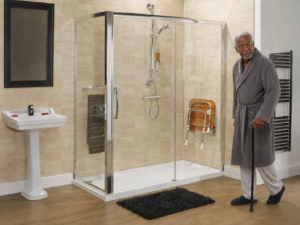
For many people with limited mobility, a walk-in shower offers a more practical day-to-day bathing solution. There’s no waiting for water to drain, no door seal to step over, and the whole process is generally quicker and easier than taking a bath.
A well-designed accessible shower will typically include a low-profile or completely level-access tray, meaning there’s no step or lip to navigate. A fold-down seat allows you to shower while seated, which is both safer and less tiring. Thermostatic controls help prevent scalding, and a handheld showerhead gives you more flexibility and control without the need to move around.
Grab rails positioned at the right height and in the right places make it straightforward to lower yourself onto the seat and stand back up again. Anti-slip flooring, whether built into the shower tray or applied as a treatment, adds another layer of protection. These features, taken together, create a bathing space that feels safe and comfortable rather than clinical.
When is a wet room the better choice for someone with limited mobility?
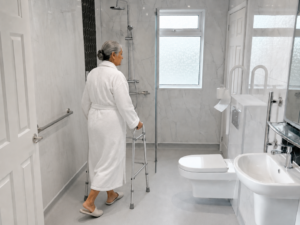
A wet room takes the concept of an accessible shower one step further by waterproofing the entire bathroom floor, removing the shower tray entirely, and allowing water to drain away through a floor-level drain. Because there is no tray or enclosure to step into, wet rooms are particularly well suited to wheelchair users or anyone who needs to be assisted while bathing.
They also make life considerably easier for carers, as there is space to manoeuvre and assist without being cramped by the sides of a shower enclosure. Wet rooms can be designed to look modern and attractive, and they often add value to a property as well as improving daily life for the people living in it.
If you’re not sure whether a walk-in shower or a wet room would suit you better, the team at Life Quality Bathing can visit your home to give you an honest recommendation based on your specific circumstances and the layout of your bathroom.
What role does bathroom flooring play in preventing slips and falls?
Flooring is one of the most overlooked aspects of bathroom safety. Smooth, glazed tiles look elegant but can become extremely slippery when wet, particularly for someone who already has balance or coordination difficulties. If your current flooring is slippery, it’s worth considering a change even if you’re not planning a full bathroom renovation.
Specialist wet room flooring and anti-slip vinyl options are available that feel warm underfoot, are easy to clean, and provide reliable grip even when wet. Life Quality Bathing offers a range of flooring options specifically chosen for safety and comfort in accessible bathrooms.
How do you know which bathroom adaptation is right for your situation?
Everyone’s circumstances are different. Your mobility, the layout of your home, the level of assistance you have available, and your personal preferences all affect what type of solution will work best for you. It’s rarely helpful to make a decision based purely on what you’ve seen advertised or what a friend has had done, because what suits one person may not suit another.
The most reliable way to find the right solution is to speak with an experienced specialist. Life Quality Bathing have been designing and installing mobility bathrooms for over 25 years and hold independent accreditations from Checkatrade, The Guild of Master Craftsmen, Trustatrader, and Which? Trusted Trader. You’re welcome to visit our showroom in Tamworth, the largest mobility bathroom showroom in the UK, or arrange a home visit at a time that suits you.
Taking the first step towards a safer bathroom doesn’t have to feel daunting. A good specialist will listen carefully, explain your options clearly, and never pressure you into a decision. The goal is simply to help you bathe safely and comfortably, in your own home, for as long as possible.
Frequently asked questions about safe bathing with limited mobility
Is a walk-in bath or a walk-in shower safer for someone with limited mobility?
Both can be very safe when properly designed and installed. Walk-in showers are generally quicker and easier to use on a daily basis, and there’s no waiting for the bath to drain before you can get out. Walk-in baths are a better choice for people who specifically want to enjoy a soak and find bathing more comfortable than showering. The right answer depends on your personal preferences and the nature of your mobility difficulties.
Can grab rails really make a significant difference to bathroom safety?
How long does it take to have a walk-in bath or accessible shower installed?
Does an accessible bathroom have to look institutional or medical?
Absolutely not. Modern mobility bathrooms are designed to look and feel just like any other high-quality bathroom. Walk-in baths come in sleek, contemporary designs, and wet rooms in particular can look extremely stylish. The safety features, such as grab rails and non-slip flooring, can be chosen to complement the overall design rather than standing out awkwardly.