For many people living with a disability, the bathroom is one of the most challenging rooms in the home. Tasks that others take for granted, such as stepping into a bath or standing under a shower, can become exhausting, painful, or even unsafe. Yet with the right adaptations, the bathroom can be transformed into a space that genuinely supports independence, dignity, and wellbeing, regardless of age or condition.
Walk-in baths, walk-in showers, and wet rooms have helped thousands of people across the UK to manage their own personal care more easily and safely. These are not just products aimed at older adults. They are practical, well-designed solutions that make a real difference for people with a wide range of disabilities, from physical conditions to neurological and sensory differences.
In this article, we look at how different accessible bathroom options can support people with specific disabilities, and why making the right choice for your circumstances can have a significant impact on day-to-day quality of life.
Why can a standard bathroom be a barrier for people with disabilities?
Most homes are built with a standard bathroom layout that assumes the user has full mobility, strength, and balance. A conventional bath requires you to lift your legs high over the side, lower yourself carefully, and then haul yourself back up again. Standard shower trays involve stepping up and over a lip. Narrow doorways, hard tiled floors, and a lack of support rails create an environment that, for many people, carries a real risk of slipping or falling.
For someone managing a condition that affects mobility, coordination, pain, or fatigue, these physical challenges are not minor inconveniences. They can make daily bathing difficult or even dangerous, and in some cases lead people to avoid bathing altogether, which in turn affects their health and confidence.
Accessible bathrooms are designed to remove those barriers. Walk-in baths, level-access showers, and fully fitted wet rooms each offer different benefits depending on the person’s needs, and the right solution often depends on the nature of the disability itself.
How can walk-in baths help people with arthritis and joint conditions?
Arthritis is one of the most common conditions in the UK, affecting around 10 million people according to the NHS. For those with significant joint pain or stiffness in the hips, knees, or spine, getting in and out of a conventional bath is not just uncomfortable but genuinely risky.
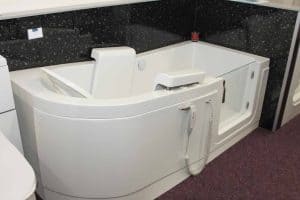
A walk-in bath has a low-access door built into the side of the bath, which means you open the door, step through it with minimal leg lift, sit down, close the door, and then fill the bath around you. There is no need to swing your legs up and over a high side. For people with arthritis, this simple change can make soaking in a warm bath possible again when they had previously given it up entirely.
Warm water immersion is widely recognised as beneficial for joint pain and muscle stiffness, so being able to bathe independently again brings both physical and psychological benefit. Many walk-in baths also come with optional spa jets, which can provide gentle hydrotherapy to help ease joint discomfort.
What makes wet rooms the right choice for wheelchair users and those needing assisted bathing?
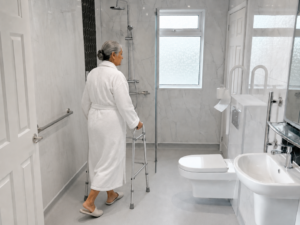
A wet room is a fully waterproofed, level-access bathroom where there is no shower tray or step at all. The shower drains directly into the floor, and the whole room can get wet without any risk of water escaping. For wheelchair users, this is often the most practical accessible bathroom solution available.
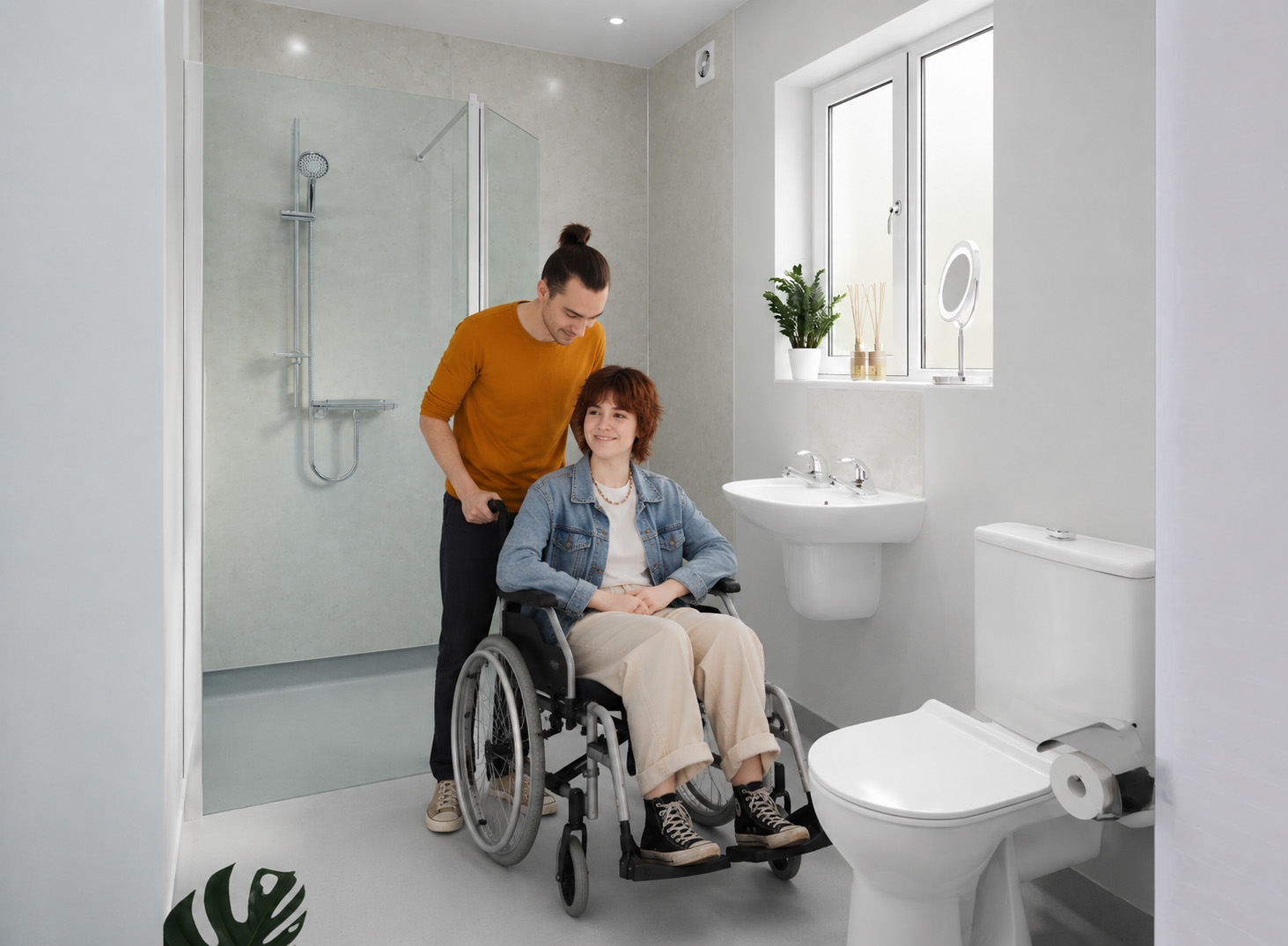
Because there is no raised threshold to negotiate, a wheelchair can be wheeled directly into the shower area. Strategically placed grab rails and a fold-down shower seat mean that those who need to transfer from a wheelchair can do so safely and comfortably. For people who require help from a carer, the open-plan layout of a wet room makes assisted washing significantly easier, with enough space for both the person and their carer to move around safely.
Wet rooms are also a strong choice for people with conditions such as multiple sclerosis (MS), spinal cord injuries, or muscular dystrophy, where mobility can fluctuate or deteriorate over time. Because a wet room is level throughout, it remains a practical option as needs change, meaning it is a long-term investment rather than a short-term fix.
How walk-in showers support people living with Parkinson's disease
Parkinson’s disease affects movement, coordination, and balance, making activities that require precise physical control particularly challenging. Stepping into a conventional shower tray, adjusting the temperature, and maintaining balance while washing can all be demanding tasks for someone with Parkinson’s, particularly when symptoms are more pronounced.
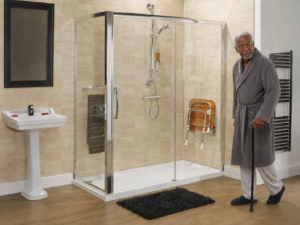
A walk-in shower with a low or flush-to-floor entry point removes the need to step up, reducing the risk of tripping. A fold-down shower seat allows the person to sit and wash without needing to stand for the duration. Grab rails positioned at the right height give something solid to hold onto, and thermostatic shower controls (which maintain a consistent water temperature without needing adjustment) remove one more variable from the process.
These adaptations, taken together, allow someone with Parkinson’s to shower independently with greater confidence and for longer, which matters enormously for their sense of self-reliance and dignity.
Can accessible bathrooms make a difference for people with autism or sensory sensitivities?
Accessible bathrooms are not only about physical mobility. For some people, the sensory environment of a bathroom can be just as significant as its physical layout. People with autism spectrum conditions, sensory processing disorder, or certain anxiety-related conditions may find the bathroom a difficult or distressing space if it involves unpredictable sensory experiences.
Features such as thermostatic shower controls, which prevent sudden changes in water temperature, can make showering feel much safer and more predictable. Wet room designs that reduce the need to step in and out of different zones can also simplify the bathing routine for those who benefit from consistency and reduced complexity. Anti-slip flooring and clearly defined spaces contribute to a calmer, more manageable environment.
When a bathroom is designed thoughtfully, it can reduce anxiety around bathing routines and help individuals maintain greater independence in their personal care.
Key features to look for when choosing an accessible bathroom for a disability
The right combination of features will depend on the individual’s specific needs, but there are several elements that make a significant difference across a range of conditions:
- Low or level-access entry: whether it is a walk-in bath door, a low shower tray, or a fully flush wet room floor, removing the need to step over a high barrier is often the single most important change.
- Grab rails and support handles: positioned correctly for the individual, these provide safe points of support when moving in and out of the shower or bath.
- Fold-down or fixed shower seats: essential for anyone who cannot stand safely for extended periods, and useful for those who simply need to conserve energy.
- Anti-slip flooring: a critical safety feature for anyone with balance difficulties, coordination challenges, or reduced sensation in their feet.
- Thermostatic controls: particularly important for those with reduced sensation, conditions that affect temperature regulation, or sensory sensitivities.
How Life Quality Bathing can help you find the right solution
At Life Quality Bathing, we have been designing and installing accessible bathrooms for over 25 years. We work with customers across the UK who are living with a wide range of disabilities, and we understand that the right solution is never one-size-fits-all.
Our showroom in Tamworth is the largest mobility bathroom showroom in the UK, where you can see walk-in baths, walk-in showers, and wet rooms in person and get a real sense of how they work. We also offer home visits if it is easier for you to have one of our team come to you, so we can assess your existing bathroom and discuss your specific needs in your own environment.
We are independently accredited by Checkatrade, The Guild of Master Craftsmen, Trustatrader, and Which? Trusted Trader, so you can feel confident that you are dealing with a company that takes quality and customer care seriously. If you would like to explore your options, we would be happy to help.
Frequently asked questions about accessible bathrooms for disabilities
Are walk-in baths and wet rooms only for elderly people?
Not at all. While accessible bathrooms are often associated with older adults, they are equally valuable for people of any age who are living with a disability, chronic condition, or injury. Walk-in baths, walk-in showers, and wet rooms are used by people in their twenties through to their eighties and beyond. The common factor is not age but the need for a safer, more manageable bathing environment.
Will an accessible bathroom make my home look clinical or institutional?
Modern accessible bathrooms are a long way from the functional, utilitarian look of the past. Today’s walk-in showers, wet rooms, and walk-in baths are available in a wide range of styles, finishes, and layouts that can be designed to look just as attractive as any standard bathroom. Safety features such as grab rails and fold-down seats are now available in designs that blend naturally with the rest of the room.
What is the difference between a walk-in shower and a wet room?
A walk-in shower typically has a defined shower area with a low-profile tray or threshold, enclosed by glass or a screen. A wet room is a fully waterproofed space with no tray at all, where the shower drains directly through the floor. Wet rooms offer the most open, barrier-free layout and are often preferred for wheelchair users or those needing assisted bathing. Both are excellent accessible options depending on your space and requirements.
How long does it take to have an accessible bathroom installed?
Installation times vary depending on the scope of the work and the type of bathroom being fitted. A straightforward walk-in shower conversion might take a few days, while a full wet room installation can take longer, particularly if significant plumbing or structural work is involved. Life Quality Bathing will give you a clear timeline before work begins, and our experienced installation teams work to minimise disruption to your daily routine.
Can a wet room or walk-in bath be fitted in a smaller bathroom?
Yes, in most cases. Many accessible bathroom solutions can be adapted to fit smaller spaces. Wet rooms in particular can be designed to make the most of compact bathrooms because the open layout does not require a separate shower enclosure. It is worth having a consultation with a specialist who can assess your existing space and advise on the best approach for your specific room dimensions.