Watching a parent start to struggle with everyday tasks is one of the harder experiences many of us go through. Perhaps you’ve noticed your mum gripping the bannister more tightly, or your dad taking longer to get ready in the morning. It can be difficult to know when to step in, how to raise the subject, and what actually makes a difference.
The good news is that, for many older people, a few practical changes at home can make an enormous difference to their confidence, comfort, and ability to manage day-to-day life on their own terms. You don’t need to overhaul everything at once. Often, the most meaningful improvements start in the room that tends to be the greatest source of anxiety for older adults: the bathroom.
Why the bathroom is often the biggest obstacle to independence
The bathroom contains more risks for older people than almost any other room in the home. Wet floors, high bath sides, slippery surfaces, and the need to balance while getting in and out of a bath or shower all combine to make it one of the most common places where falls occur.
According to the NHS, falls are the most common cause of injury-related deaths among older people in the UK, and a significant proportion of those falls happen at home. This isn’t meant to alarm you, but it does help explain why so many families find that adapting the bathroom is one of the most effective things they can do to help a parent remain at home safely and confidently.
When everyday tasks feel risky, many older people start to avoid them, or start to dread them. That kind of anxiety can quietly erode confidence and independence. Making the bathroom feel safer can genuinely change how someone feels about their day.
What does "maintaining independence" really mean?
It’s worth pausing on this, because “independence” can mean different things to different people. For some, it’s about continuing to live alone without regular help from family or care workers. For others, it’s more about keeping a sense of dignity and control, being able to wash and dress without needing assistance.
Either way, the underlying goal is the same: helping someone continue to do the things they value, in their own home, for as long as possible. Accessible bathroom solutions are one of the most practical tools available for achieving exactly that.
How a walk-in bath could transform your parent's daily routine
For many older people, a conventional bath has become something they either struggle with or have given up on entirely. Climbing over a high bath side while wet and unsteady is genuinely difficult, and it becomes more so with age.
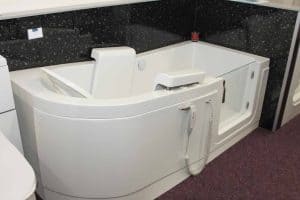
A walk-in bath offers a simple but significant change: instead of stepping over a high edge, you open a door and step in. The threshold is low, the door seals securely, and the bath fills around you once you’re seated safely. Many models include a built-in seat and optional features such as spa jets, which can be wonderfully soothing for people with arthritis or joint pain.
At Life Quality Bathing, we’ve been designing and fitting walk-in baths for over 25 years. We find that many customers who visit our showroom in Tamworth, which is the largest mobility bathroom showroom in the UK, are surprised by how attractive and practical modern walk-in baths can be. They needn’t look clinical or institutional. They can look exactly like a stylish bathroom, because that’s exactly what they are.
Walk-in showers and wet rooms: which is right for your parent?
Not everyone wants or needs a bath. For many older people, a walk-in shower or wet room can offer even greater ease of use on a daily basis.
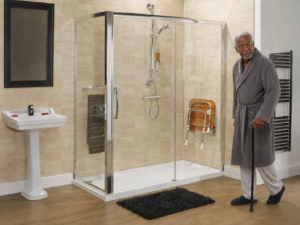
A walk-in shower with a low-profile anti-slip tray, a fold-down seat, and well-positioned grab rails allows someone to shower safely and independently, without needing to step over a raised edge or hold on to slippery tiles for balance. Many of our customers tell us it’s the single change that has given them the most confidence.
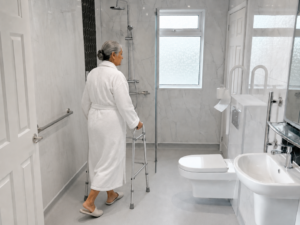
A wet room goes one step further: the entire floor is level-access, with no tray and no threshold at all. This is often the best choice for people who use a wheelchair or walking frame, or who need the assistance of a carer. Because there are no edges or lips to step over, assisted bathing becomes much simpler for both the person being helped and the person helping.
The right choice depends on your parent’s mobility, their daily routine, and whether they’re more likely to want to bathe independently or with support. A home visit consultation, of the kind we offer at Life Quality Bathing, is often the most helpful starting point, as it allows you to see the space and discuss options in a relaxed and practical way.
Other changes that can make a real difference around the home
While the bathroom tends to be the priority, other areas of the home can also be adapted relatively easily to support independence.
In general, the most impactful changes tend to be those that reduce the risk of falls and make physically demanding tasks less effortful. Grab rails fitted in hallways or near stairs, better lighting in darker areas of the home, non-slip mats on hard floors, and removing loose rugs that can catch feet are all relatively straightforward adjustments that can have a meaningful impact.
In the bathroom specifically, grab rails next to the toilet and in the shower area, a raised toilet seat if needed, and non-slip flooring can all support independence even before a full bathroom adaptation is considered.
How to have the conversation with your parent about home adaptations
Many adult children find this the hardest part. Nobody wants to feel like they’re taking over, and many older people worry that accepting help signals a loss of control over their own life.
The most helpful approach is usually to frame adaptations as something that supports independence, not something that signals the end of it. A walk-in bath or a wet room isn’t a symbol of decline. It’s a practical tool that makes it easier to stay at home, on your own terms, for longer.
It can also help to visit a showroom together. Seeing the products in person, rather than looking at brochures or websites, helps many people realise that modern accessibility solutions look and feel nothing like the institutional fittings of decades past. At our Tamworth showroom, we regularly welcome families who come along together to explore the options in a no-pressure environment.
Frequently Asked Questions
At what point should I start thinking about bathroom adaptations for my parent?
Will a walk-in bath or wet room lower the value of my parent's home?
This is a common concern, but in practice accessible bathrooms rarely have a negative impact on property value, and can actually be a selling point for buyers who are themselves older or who have elderly relatives. Modern mobility bathrooms are designed to look attractive and to blend with any home, so they rarely stand out as specialist adaptations.
How long does a bathroom adaptation take to fit?
Most accessible bathroom installations, whether a walk-in bath, walk-in shower, or wet room, can be completed within three to five working days, depending on the complexity of the work and the size of the room. At Life Quality Bathing, all installation work is carried out by our own team, and we aim to cause as little disruption as possible.
My parent is still quite mobile. Is it too soon to install a walk-in bath or shower?
Not at all. Many people choose to install an accessible bathroom as a practical investment while they’re still fully mobile, rather than waiting until they have no choice. Doing so while your parent is well and able to make unhurried decisions means they get more say in the design and finish, and they don’t have to go without a bathroom during a period of urgency or recovery.
What is the difference between a wet room and a walk-in shower?
A walk-in shower has a defined showering area, usually with a low-profile tray, and sometimes a screen or door. A wet room is fully level-access: the entire floor of the room is waterproofed and drains away, with no tray or raised edges at all. Wet rooms are particularly well suited to people who use mobility aids or who need assistance when bathing, as there are no barriers to navigate.
How do I choose a reputable company to carry out the installation?
Look for companies that carry independent accreditations, such as Checkatrade, the Guild of Master Craftsmen, Trustatrader, or Which? Trusted Trader. These accreditations provide reassurance that the work has been independently assessed and that the company has a track record of quality and customer satisfaction. Life Quality Bathing holds all four of these accreditations and has over 25 years of experience in accessible bathroom design and installation.