Why Homeowners Are Choosing Wet Rooms
Wet rooms are no longer just for luxury hotels or medical facilities. They’re now one of the most popular bathroom upgrades for homeowners of all ages.
An open, fully waterproof space makes your bathroom feel bigger, easier to clean, and far safer for anyone with limited mobility. For seniors or wheelchair users, the level-access design eliminates barriers and reduces the risk of slips or trips.
Whether you’re updating your home for accessibility, style, or resale value, converting a standard shower into a wet room is a smart investment.

Step 1: Assess Your Bathroom Layout
Before beginning any renovation, it’s crucial to evaluate your existing space.
Check the floor structure: Is it solid concrete or timber joists? This affects how drainage and waterproofing will be installed.
Measure the shower area: You’ll need enough gradient for water to flow naturally to the drain.
Plan for accessibility: Allow at least 900 mm x 900 mm of clear space for easy movement.
Tip: This is the perfect stage to consult a mobility specialist or bathroom designer who understands wet-room safety standards.
Step 2: Choose the Right Waterproofing System
A successful wet room depends entirely on proper waterproofing.
Apply a watertight membrane to the entire floor and lower wall area.
Seal all joints and corners meticulously. Leaks are the most common wet-room issue!
For added peace of mind, hire certified installers who use trusted waterproofing systems approved for accessible bathrooms:
Step 3: Create a Level Access Floor
This is what makes a wet room truly “wet.”
Remove the old shower tray and recess the floor slightly to allow for drainage slope.
Install a pre-formed wet-room tray or slope the subfloor to the drain.
Finish with non-slip tiles or vinyl flooring specifically rated for wet areas.
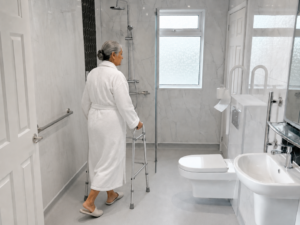
The goal is a seamless, barrier-free entry — easy to roll into with a wheelchair or walker, and safer for everyone.
Step 4: Add Safety and Comfort Features
Now that your wet room is structurally ready, enhance it with smart accessibility features that improve comfort and independence:
Grab rails near the shower and toilet for stability.
Fold-down shower seat for those who prefer to sit while bathing.
Thermostatic shower mixer to maintain consistent water temperature.
Good lighting.
Modern safety fixtures blend seamlessly to give a traditional bathroom feel. Sleek and discreet.
Step 5: Choose Stylish Finishes and Details
A wet room doesn’t have to look clinical.
Opt for large-format tiles/wallboards to create a smooth, minimalist aesthetic.
Use glass screens or partial partitions to keep the space open but control splashes.
Finish with natural tones or matte textures for a spa-like feel.
Your bathroom can and should be tailored to your exact preferences to be both functional and beautiful.
Bonus: Maintaining Your Wet Room
Once installed, wet rooms are surprisingly low-maintenance.
Wipe down tiles and glass regularly to prevent soap buildup.
Keep the drain clear of hair and debris.
Ensure the waterproofing membrane remains intact during any future repairs.
With proper care, a quality wet-room installation will last 15–20 years or more.
Talk to a Mobility Specialist
Converting a shower into a wet room can seem complex but with the right expertise, it’s a smooth and rewarding project.
At Life Quality Bathing, we specialise in mobility-friendly bathroom renovations that combine safety, style, and durability. Whether you need a full accessible wet room or a modern low-threshold design, our team can handle every detail from planning to installation.
Contact us today for a free consultation or design quote.
👉 0800 448 0448 | info@life-quality.co.uk | www.life-quality.co.uk