If washing has started to feel like a worry rather than a simple part of your day, you’re certainly not alone. As we get older, our balance and confidence in the shower can change, and a shower that once felt ordinary can start to feel like an obstacle course. Choosing the safest type of shower for an elderly person is one of the most practical steps you can take to reduce that worry, both for yourself and for anyone who cares about you.
There are several accessible shower options designed with older adults in mind, and the right choice depends on your mobility, your home, and how much support you might need in future. In this article, we’ll look at what makes a shower safe, which designs tend to work best, and how to approach the decision without feeling overwhelmed.
At Life Quality Bathing, we’ve spent over 25 years helping people across the UK create bathrooms that feel safe and dignified. We’ll draw on that experience here, alongside guidance from trusted health sources, to help you make a confident decision.
Why does shower safety matter so much for older adults?
Bathrooms are consistently one of the most common places for falls to happen in the home, and this risk increases with age. The NHS reports that one in three people over 65 will suffer a fall each year, often as a result of balance problems, poor vision, or a long-term health condition. Combine that with a wet, slippery floor and a high step to climb over, and it’s easy to see why so many falls happen in and around the shower.
A fall doesn’t just carry the risk of injury. For many older people, it can be the start of a loss of confidence that leads them to avoid showering as often as they’d like, or to rely more heavily on family members for help. A genuinely safe shower removes that worry, so bathing can go back to being a simple, independent part of daily life.
What actually makes a shower safe for elderly people?
Safety in a shower comes down to a handful of practical features working together, rather than any single clever gadget. A low or level threshold means there’s no step to lift your leg over, which is one of the biggest causes of trips. Anti-slip flooring gives your feet proper grip even when the surface is wet, and a fold-down or fixed seat means you don’t have to stand for the whole time you’re washing.
Grab rails positioned in the right places give you something secure to hold onto as you move in and out. Good, glare-free lighting helps you see clearly, and a shower control that’s easy to reach (ideally a thermostatic one that prevents sudden temperature changes) rounds out a genuinely safe design. None of these features need to make a bathroom look clinical. Done well, they simply feel like a comfortable space.
Is a walk-in shower or a wet room the safer option?
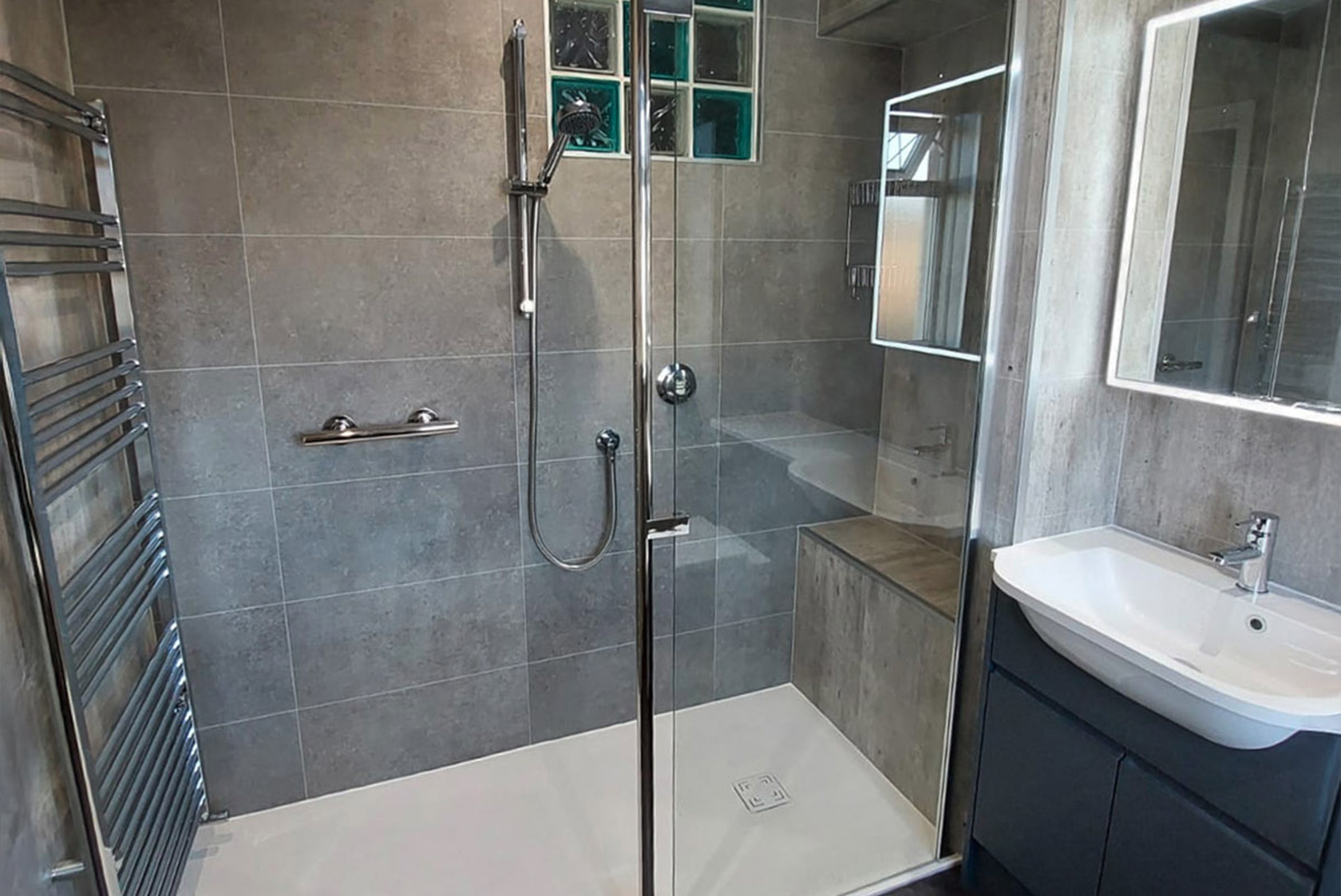
This is one of the most common questions we’re asked at our showroom, and the honest answer is that it depends on your needs. A walk-in shower typically has a very low-level shower tray, a wide opening, and a fold-down seat and grab rails built in. It’s a great fit for most people who can walk into the shower independently, perhaps with a little support.
A wet room takes accessibility a step further. The whole floor is tiled and gently sloped towards a drain, so there’s no tray or lip at all, just a completely flat, level surface. This makes it the safer choice for wheelchair users, or for anyone who needs a carer to assist with bathing, since there’s nothing to negotiate getting in or out. Wet rooms also tend to feel more spacious, which matters if a wheelchair or shower chair needs to be manoeuvred around.
If you’re supporting a parent or relative and aren’t sure which is right for them, it’s worth thinking honestly about how their mobility might change over the next few years, not just how things stand today.
Could a walk-in bath be a better fit than a shower?
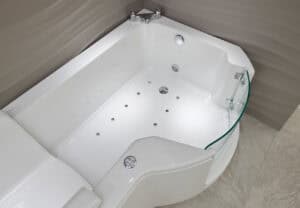
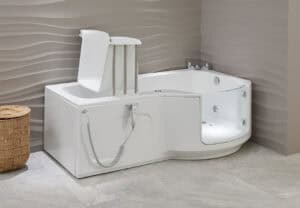
For some people, a bath still matters, whether that’s for comfort, for soaking away aches and pains, or simply because it’s what they’ve always preferred. A walk-in bath offers many of the same safety features as a walk-in shower (a low-access door, anti-slip flooring and grab rails) while still allowing you to sit and soak. Many of our walk-in baths also include optional spa features such as hydrotherapy jets, which can be genuinely helpful for people with arthritis or poor circulation. An easy access shower bath is worth mentioning too, as it’s a hybrid solution combining a lower-access bath with a shower function, without needing two separate installations.
What should you look for when choosing a shower seat or grab rail?
Not every seat or rail is created equal. A shower seat should be sturdy enough to bear full weight without any wobble, and set at a height that makes standing back up straightforward. Fold-down seats are popular as they tuck neatly out of the way, while still being solid and dependable when needed.
- Grab rails should be fixed into a solid wall or reinforced backing, never just tiles or plasterboard, so they can safely take your full weight.
- Rails placed both at the entrance and inside the shower give support at the two moments people are most likely to lose their balance.
How do you decide between the different options for your home?
There’s rarely a single ‘best’ answer, because the right shower depends on the individual, the bathroom itself, and how needs are likely to change. Someone who’s steady on their feet but wants extra reassurance might be perfectly served by a simple walk-in shower with a seat and rails. Someone with more significant mobility needs, or a carer assisting with bathing, will usually be better served by a wet room.
This is exactly why we offer both showroom consultations and home visits. Seeing different shower and bath options in person, in our showroom (the largest mobility bathroom showroom in the UK), makes it far easier to picture how a design would work day to day. A home visit allows us to properly assess your bathroom’s layout and space before recommending a solution that genuinely suits you.
What does the installation process usually involve?
A common concern is that adapting a bathroom will mean weeks of upheaval, but a well-planned installation is usually more contained than people expect. It begins with a consultation to understand your needs, followed by a design plan showing how the new shower, wet room or bath will fit. Installation is carried out by qualified bathroom fitters, and most projects are completed within days rather than weeks.
Because Life Quality Bathing is independently accredited by organisations including Checkatrade, The Guild of Master Craftsmen, Trustatrader and Which? Trusted Trader, you can have confidence the work meets recognised standards from start to finish.
Frequently asked questions
What is the single safest type of shower for an elderly person?
There isn’t one design that suits everyone, but a level-access wet room is generally considered the safest overall, since it removes any step to negotiate. For people who can still walk in independently, a walk-in shower with a low threshold, seat and grab rails is often perfectly safe.
Can a walk-in shower be fitted in a small bathroom?
Yes, walk-in showers are generally more flexible with space than wet rooms and can often be fitted into a compact bathroom. During a home visit, we can assess your layout and recommend a design that makes the best use of the space available.
Do I need a wet room if I use a wheelchair?
A wet room is usually the most practical option for wheelchair users, because its completely level, gently sloped floor means there’s no tray or step to cross. It also tends to give more room to manoeuvre a wheelchair safely.
How long does it take to have a walk-in shower or wet room fitted?
Are grab rails and shower seats enough on their own, or do I need a full new shower?
Adding grab rails and a seat to an existing shower can help, but if there’s still a step or tray to climb over, this won’t remove the biggest risk. A full walk-in shower or wet room is usually a more lasting solution.
Will an accessible shower make my bathroom look clinical?
Not at all. Modern accessible showers and wet rooms are designed to look stylish and comfortable, with a wide choice of tiles and finishes. Safety features like grab rails and seats can be chosen to blend naturally with the design.