If you’re thinking about making your bathroom safer or easier to use, it’s natural to wonder how much disruption that might involve. The words “bathroom adaptation” can conjure up images of skips on the driveway, weeks without a working bathroom, and bills that spiral out of control. The good news is that reality is often far less dramatic than that.
Accessible bathrooms come in many shapes and sizes, and so do the projects that create them. Some changes are relatively minor, taking just a day or two to complete. Others do involve a fuller renovation, but even then, experienced specialists like our team at Life Quality Bathing work hard to minimise disruption and keep things moving as efficiently as possible.
In this article, we’ll walk you through what accessible bathroom work typically involves, help you understand when a full renovation is and isn’t necessary, and give you a clearer sense of what to expect from the process.
What does “accessible bathroom” actually mean?
An accessible bathroom is simply one that’s designed to be safe, comfortable, and easy to use for people with reduced mobility, limited strength, or balance difficulties. That might mean a bathroom for someone recovering from a hip replacement, an older person who finds stepping over a bath rim a little daunting, or a wheelchair user who needs a fully level-access wet room.
The term covers a wide range of solutions, from grab rails and a non-slip mat at one end of the spectrum, all the way through to a purpose-built wet room at the other. What’s right for you will depend on your specific needs, your existing bathroom layout, and how much change you want or need to make.
When can accessible changes be made without a full renovation?
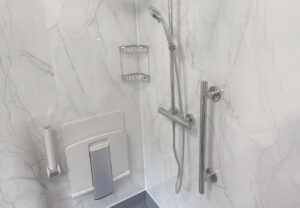
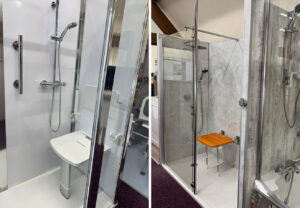
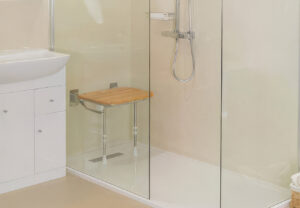
Plenty of meaningful accessibility improvements can be made without touching the main structure of your bathroom at all. Adding grab rails, for instance, is a straightforward job that a qualified fitter can usually complete in a few hours. Swapping a standard shower tray for a low-profile one, fitting a fold-down shower seat, or replacing a slippery floor with a safer surface can all be done with relatively limited disruption.
Walk-in showers, too, can often be installed within an existing bathroom footprint without requiring structural work. If your bathroom already has a shower enclosure, the upgrade may be simpler than you think. Similarly, if you’re interested in a walk-in bath, these are designed to fit into the space a standard bath would occupy, so in many cases the plumbing connections are already in the right place.
That said, every bathroom is different, and an honest assessment from a specialist is always the best starting point. Our team carries out home visits throughout the UK, so we can look at your specific space and give you a realistic picture of what’s involved before any decisions are made.
Which accessible bathroom options are most likely to need more substantial work?
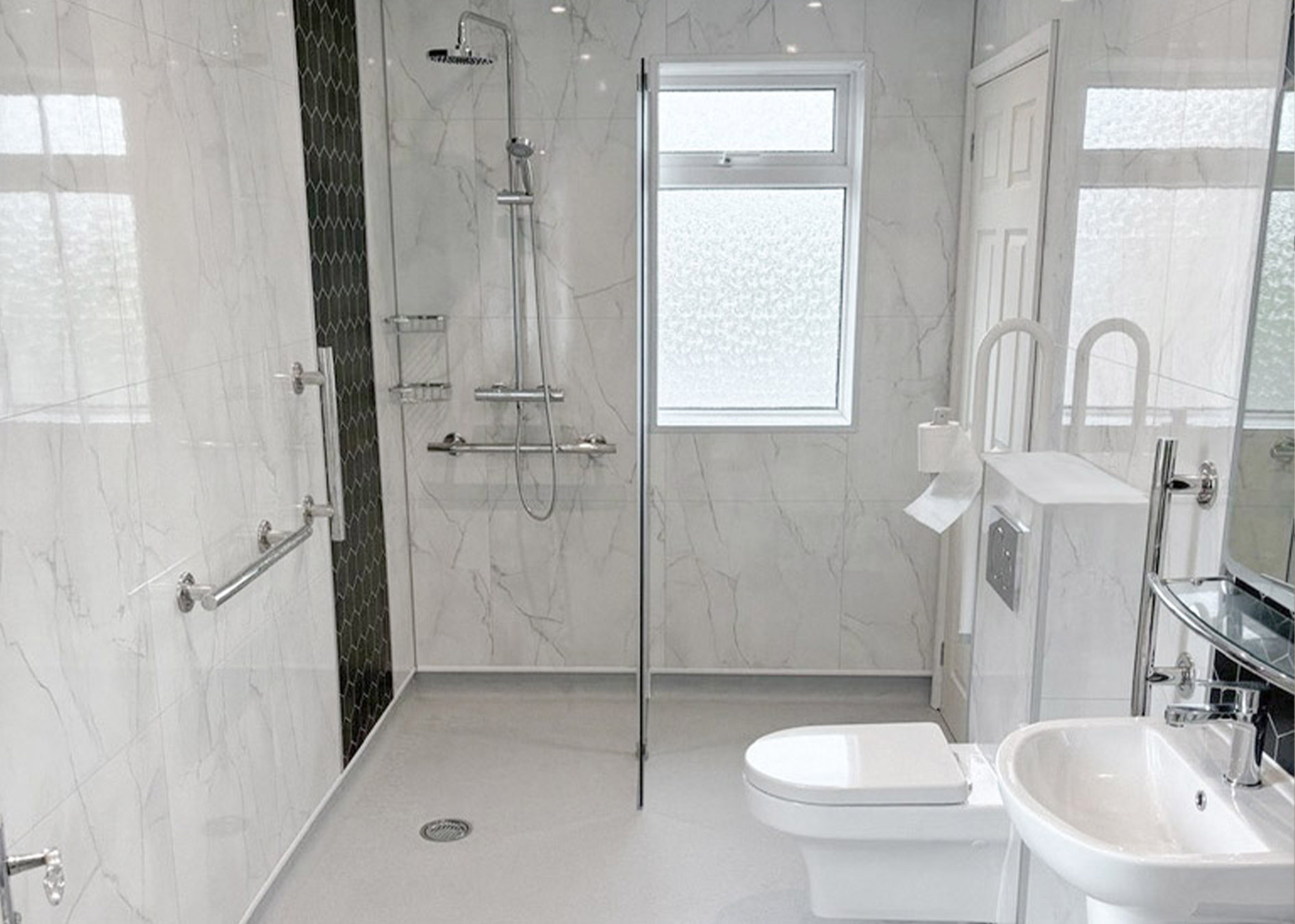
Wet rooms are the accessible bathroom solution most likely to require more extensive work. Because they are fully level-access, with no step or threshold at all, the floor needs to be properly waterproofed and graded so that water drains away correctly. Depending on your existing flooring and subfloor, this can involve more preparation than a simpler installation.
Wet rooms are particularly well suited for wheelchair users or those who need assisted bathing, and for many people they represent the most practical long-term solution. The additional work involved is usually worth it for the freedom and safety they provide. With over 25 years of experience, we’ve fitted wet rooms in all sorts of properties and can give you a clear, honest estimate of what’s involved in yours.
If you’re converting a bathroom that currently has a bath only, into one that includes a walk-in shower or wet room, there will naturally be some reconfiguration required. But this is a very common project for our team, and we’ll always aim to manage the timeline so that you’re without a working bathroom for as short a time as possible.
How long does accessible bathroom installation typically take?
Timescales vary depending on the type and complexity of the work, but here’s a rough guide to help set expectations.
- Adding grab rails or a shower seat: typically a half-day to one day.
- Replacing a bath with a walk-in bath or walk-in shower: usually two to three days.
- A full wet room conversion: typically three to five days, depending on your existing bathroom and the level of finish required.
- A complete accessible bathroom renovation, including new fixtures, fittings, flooring, and wall finishes: this can take up to a week or slightly longer for a more complex project.
Our fitters will always give you a clear timeline before work begins, and we’ll keep you informed as the project progresses. For many of our customers, the finished result far exceeds their expectations, and the disruption turns out to be far less worrying than they anticipated.
Could an easy access shower bath be the right middle ground for you?
If you’re not ready to give up your bath entirely but want something safer and easier to use than a traditional one, an easy access shower bath might be worth exploring. These are designed to offer the best of both worlds: a bath you can still soak in, with a lower entry point and shower facilities built in.
Because they’re designed to fit into a standard bath space, the installation is often more straightforward than a full wet room conversion. They’re a popular choice for people who want to make their bathroom safer without committing to a more significant change, and they can make a real difference to day-to-day confidence and comfort.
Why visiting our showroom can help you make the right decision
One of the most helpful things you can do before making any decisions is to see the options in person. Our showroom in Seckington, Tamworth, is the largest mobility bathroom showroom in the UK, and it’s open for anyone who wants to come and have a look around without any pressure to buy.
Being able to step into a walk-in shower, try the door on a walk-in bath, or see how a wet room actually feels underfoot makes a huge difference when it comes to deciding what’s right for you. Our team are on hand to answer questions and help you understand exactly what each option would involve for your home.
If travelling to the showroom isn’t convenient, we’re also happy to come to you. Our home visit service allows us to see your existing bathroom, discuss your needs in your own home, and give you accurate, tailored advice with no obligation.
Accreditation and peace of mind when choosing a specialist
When it comes to any work in your home, it’s important to feel confident in the people you’re trusting with it. Life Quality Bathing is independently accredited by Checkatrade, The Guild of Master Craftsmen, Trustatrader, and Which? Trusted Trader. These aren’t just badges on a website; they represent a genuine commitment to quality workmanship, honest pricing, and treating every customer with respect.
We’ve been doing this for over 25 years, and we understand that for many of our customers, this kind of project is something they’ve thought about for a long time. Our goal is always to make the process feel manageable, not overwhelming.
Frequently asked questions about accessible bathroom renovations
Will I be without a bathroom while the work is being done?
For most projects, yes, there will be some time when your bathroom is out of use, but we aim to keep this as short as possible. For smaller jobs such as adding a walk-in bath or shower, the work is often complete within two to three days. For more involved projects, we’ll discuss the timeline with you upfront so you can plan accordingly.
Do I need planning permission to install an accessible bathroom?
In most cases, no. Internal bathroom alterations in your own home generally fall under permitted development and don’t require planning permission. If your home is a listed building or in a conservation area, there may be additional considerations, and we’d advise checking with your local authority if you’re unsure.
Is a wet room more expensive than a walk-in shower?
Generally, yes, a wet room does tend to cost more than a walk-in shower, primarily because of the waterproofing and floor preparation required. However, the cost varies considerably depending on the size of your bathroom, the materials you choose, and the amount of work your existing space needs. A walk-in shower is often the more affordable option if your mobility needs don’t require a fully level-access solution.